Choosing the right binding for your booklet isn't just a final step; it's a decision that fundamentally shapes how your document is used, how long it lasts, and the impression it makes. While there are many booklet binding options out there, the most common ones you'll run into are saddle-stitch, perfect, spiral, and wire-o binding. Each one has its own strengths, and the best choice really boils down to your page count, how the booklet will be used, and your budget.
Choosing the Right Booklet Binding
The goal is to match the binding method to the booklet's purpose. A glossy marketing catalog just won't work with the same binding as a rugged training manual that needs to lie perfectly flat on a workbench. Getting clear on your project's specific needs from the start is the key to a great result.
Before you go any further, ask yourself a few questions:
- How will people use it? If they need to write in it or keep it open hands-free, a lay-flat option like spiral or wire-o is a must.
- What's the page count? This is a huge factor. Saddle-stitching is fantastic for thinner booklets, but you’ll need something more robust like perfect binding for a thicker document.
- What's the vibe? The binding says a lot about quality. Perfect binding gives you that clean, professional "paperback book" spine, which is perfect for high-stakes reports and portfolios.
- What's the budget? Costs can differ significantly. Saddle-stitching is one of the most cost-effective methods for large quantities, while other, more complex bindings will have a higher price per piece.
At-a-Glance Guide to Booklet Binding Options
Use this summary to quickly compare binding types based on key features, helping you make a preliminary decision for your project.
| Binding Type | Ideal Page Count | Lays Flat? | Best For |
|---|
| Saddle-Stitch | 8-64 Pages | Mostly Flat | Catalogs, event programs, thin magazines |
| Perfect Binding | 40-250+ Pages | No | Paperback books, corporate reports, lookbooks |
| Spiral/Coil | 12-200+ Pages | Yes | Manuals, workbooks, notebooks, calendars |
| Wire-O | 12-150+ Pages | Yes | Presentations, proposals, architectural plans |
This table gives you a solid starting point for narrowing down your choices based on the most common project requirements.
For many projects, the decision comes down to page count, which often makes the choice between saddle-stitch and perfect binding pretty clear.
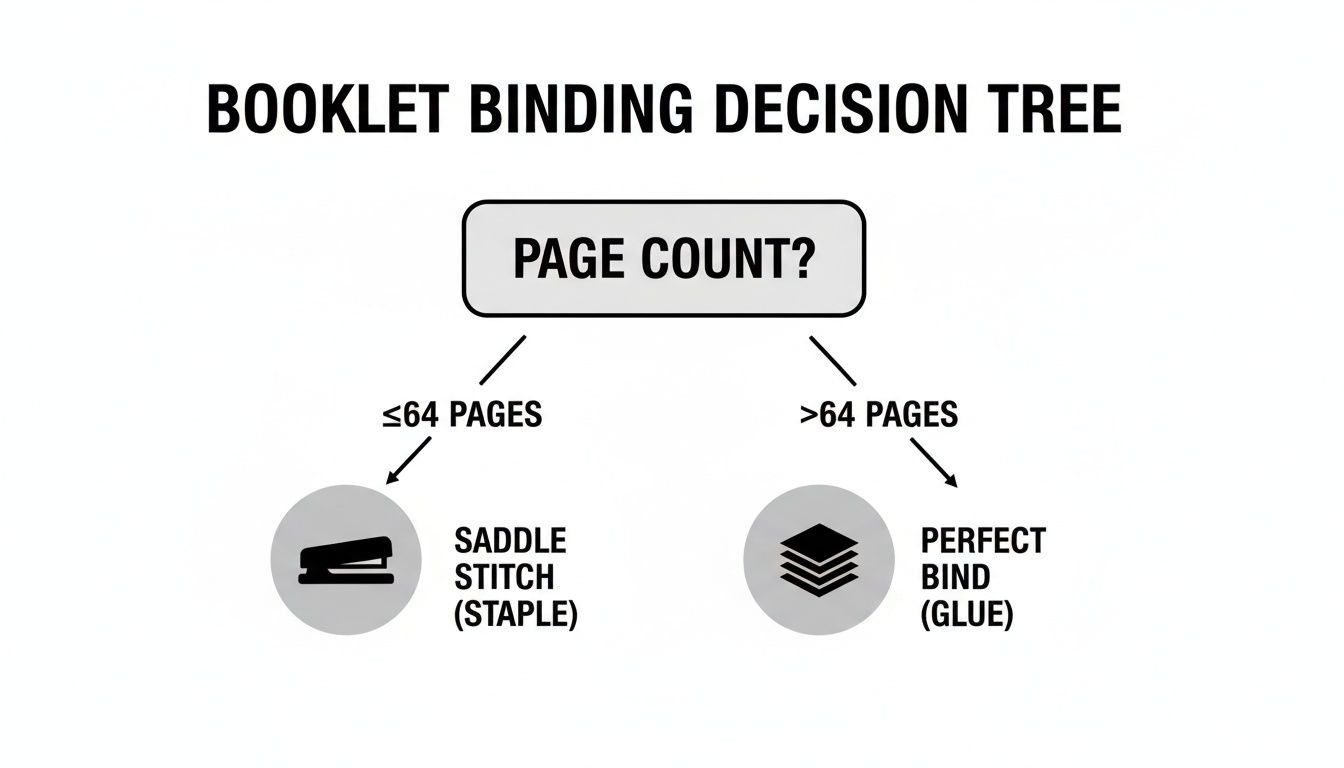
As you can see, page count is often the first gate you’ll pass through when weighing your booklet binding options. It’s a simple, effective way to immediately rule certain methods in or out.
A Head-to-Head Comparison of Binding Styles
Picking the right binding for your booklet is about more than just looks—it’s about function. How will people actually use this document? The way it’s bound dictates everything from its shelf life to the reader's experience, so let's break down the real-world trade-offs between the most common booklet binding options.
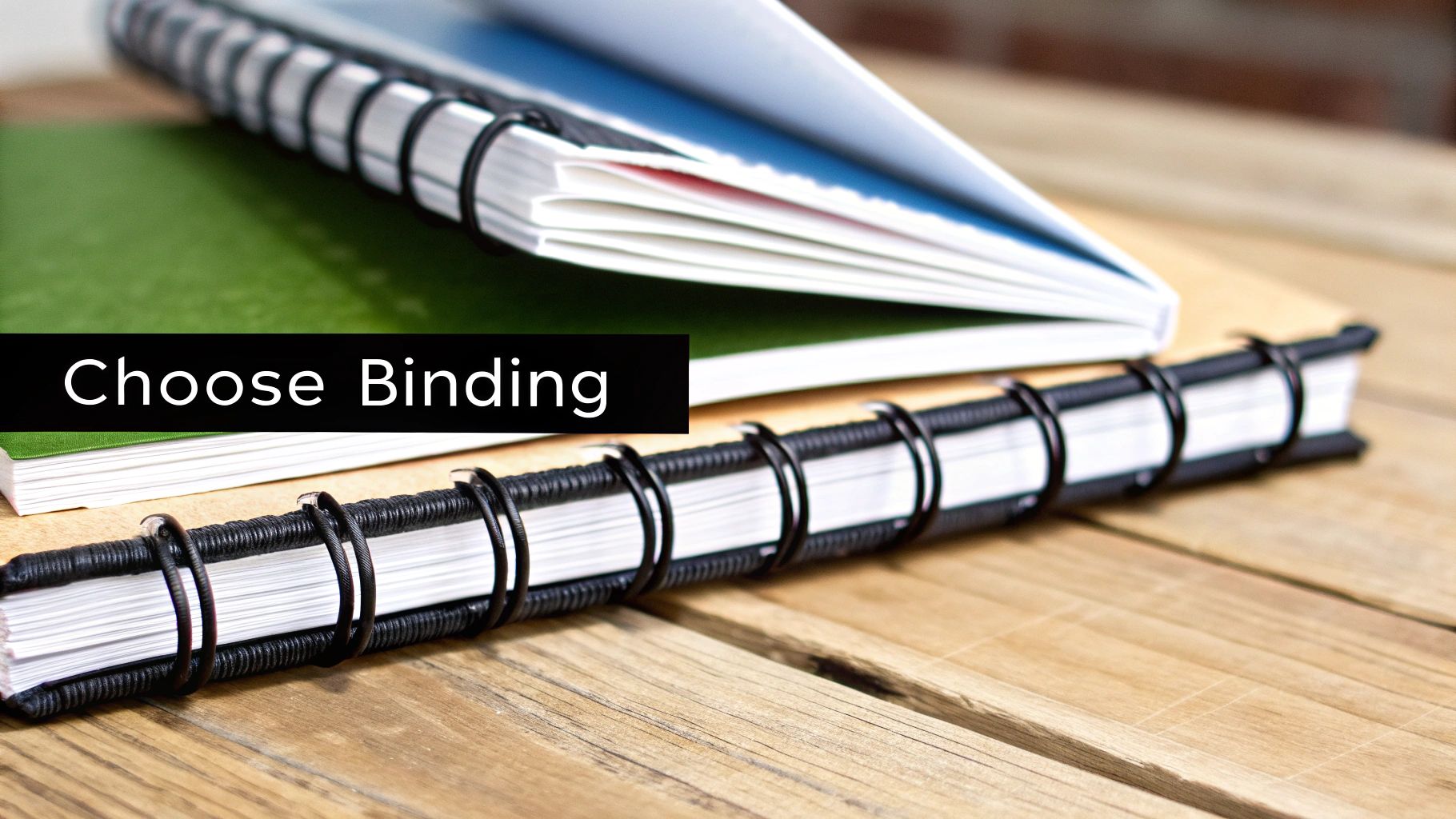
We'll move past generic pros and cons to get into the practical details that make or break a project, looking at each choice through the lens of real-world scenarios.
Saddle-Stitch vs. Perfect Binding
For most businesses, the first big decision is between saddle-stitching and perfect binding. While page count is a major factor, the differences in feel, durability, and even design are just as critical.
Saddle-stitching is the workhorse for thinner booklets—think event programs, small catalogs, and marketing mailers. The process is simple: sheets are folded, nested inside one another, and then stapled through the fold with two or more wire staples. That straightforward approach makes it incredibly cost-effective and quick to produce, a huge advantage for high-volume jobs.
Perfect binding, on the other hand, gives you that classic paperback book finish. The pages are stacked into a block, the binding edge is ground down and roughed up, and a strong, flexible adhesive glues it all into a wraparound cover. The result is a clean, flat spine you can print on, which adds a professional touch to annual reports, corporate portfolios, and thicker catalogs.
The key functional difference? A saddle-stitched booklet can open and lay relatively flat, which is great for readability. A perfect-bound book can't, making it tricky for designs that span a two-page spread.
Key Differentiator: The choice really comes down to this: the economical, lay-flat function of saddle-stitching for lower page counts versus the premium, book-like feel of perfect binding for thicker documents. That printable spine on a perfect-bound book is also a massive branding opportunity.
One unique challenge with saddle-stitching is page creep. Because the pages are nested, the innermost sheets stick out farther than the outer ones. When the booklet is trimmed, those inner pages become slightly narrower, which can eat into your margins. For thicker saddle-stitched projects (getting close to 64 pages), a designer has to compensate for creep to avoid a sloppy-looking final product.
Spiral Coil vs. Wire-O Binding
When your document absolutely must lie flat or even fold back on itself, you're looking at mechanical binding styles like spiral coil and wire-o. These are non-negotiable for training manuals, workbooks, cookbooks, and any presentation where you need to be hands-free.
Spiral binding uses a continuous plastic coil that's spun through a line of punched holes. That plastic coil is surprisingly resilient—it can get squished in a bag and still bounce back to its original shape. This durability makes it the top choice for a lay-flat option that will see heavy, everyday use, like in school materials or field guides.
Wire-o binding, also known as twin-loop, uses a series of C-shaped metal wire loops. These are inserted into the punched holes and then crimped shut. This method just looks more polished and professional than a plastic coil. It’s a favorite for high-stakes client proposals, architectural plans, and marketing lookbooks where a sophisticated appearance is part of the pitch.
Though they both offer 360-degree page rotation, they feel a bit different in practice.
- Spiral Coil: The single, continuous coil makes for a very smooth page-turning experience. Its ruggedness makes it perfect for high-traffic environments.
- Wire-O: The double-loop design can sometimes cause pages to snag if you're not careful. But that crisp, metallic look is something plastic just can't replicate.
Comb Binding vs. Other Lay-Flat Options
Comb binding is another functional choice that often serves as a practical middle ground. It uses a rectangular plastic spine with rings (the "combs") that fit into punched holes.
Its standout feature is that the comb can be opened and closed. This means you can add or remove pages after the document is bound—a game-changer that spiral and wire-o can't offer. This makes comb binding ideal for documents that evolve, like internal training manuals or legal case files that need updating.
But there are trade-offs. The plastic combs aren't as tough as spiral coils and can get brittle over time. And while the pages do lie flat, they don't turn as fluidly as with coil or wire-o, and the spine itself adds a bit of bulk.
For instance, a law firm might use comb binding for a deposition transcript, knowing they might need to add exhibits later. An architecture firm, however, would likely choose wire-o for a client presentation, where a sleek, permanent finish makes a better impression.
A Comparative Overview
To help you decide at a glance, here’s how these popular booklet binding options compare across the most important criteria.
| Feature | Saddle-Stitch | Perfect Binding | Spiral Coil | Wire-O |
|---|
| Aesthetic | Simple, clean | Professional, book-like | Functional, durable | Premium, modern |
| Lay-Flat Ability | Mostly flat | No | Yes (360°) | Yes (360°) |
| Spine | Folded, stapled | Flat, printable | Rounded coil | Double-loop metal |
| Durability | Low to moderate | High | Very high | High |
| Ideal Use Case | Event programs | Annual reports | Training manuals | Client proposals |
Ultimately, the right binding is a balance between your document's purpose, your audience, and your budget. By understanding these subtle but important differences, you can pick a binding that doesn't just hold things together but actually enhances the impact of your project.
Matching Your Binding to Your Industry
Choosing the right binding goes way beyond just holding pages together. It's about function, feel, and matching the professional expectations of your audience. The slick, polished binding you’d want for a marketing lookbook would be a disaster for architectural blueprints on a muddy job site. The real key is picking a method that makes the document work better and signals that you understand the standards of your field.
This decision is also shaped by big shifts in the printing world. On-demand printing and the need for shorter, faster production runs have changed the game. What we’re seeing now is a move away from one-size-fits-all solutions toward highly specific booklet binding options. These modern methods are built to handle very specific needs, from using sustainable materials to creating personalized, one-off documents. You can explore more about these trends and how they’re impacting the industry.
AEC Blueprints and Spec Books
For anyone in architecture, engineering, or construction, documents are tools of the trade. Blueprints, spec books, and proposals live on desks, get spread out in client meetings, and get passed around on active job sites. Functionality is everything, and having a document that can lie completely flat isn't a luxury—it's a requirement.
That’s why wire-o and spiral binding are the go-to choices. Both allow pages to rotate a full 360 degrees, which is perfect for hands-free viewing of complex diagrams and dense specifications.
- Wire-O Binding: This gives you a crisp, metallic finish that just looks sharp. It adds a touch of class to client-facing presentations and final proposals, and its rigid structure keeps every page perfectly aligned.
- Spiral Coil Binding: Made from a flexible plastic coil, this binding is tough as nails. You can toss it in a truck or roll it up without crushing the spine, making it the clear winner for documents that will see heavy use out in the field.
Industry Insight: An architectural firm will almost always spec wire-o for the final project proposal they hand to a client—that sleek, modern look reflects precision and quality. For the construction crew’s on-site spec book, however, the rugged durability of a spiral coil is far more practical.
Legal Documents and Briefs
The legal world runs on precision, security, and the need to make changes on the fly. Depositions, case files, and evidentiary briefs are often living documents, assembled over time. You need a binding that lets you add or remove pages without destroying the whole thing.
Comb binding has long been the standard in the legal field for exactly this reason. The plastic comb holds pages securely, but the spine can be easily reopened to insert new evidence or exhibits. That flexibility is invaluable. Plus, the pages lie flat, which is essential for courtroom presentations and depositions where you need to find information fast.
Education and Corporate Training Manuals
When it comes to education and corporate training, you have to assume the materials will be put through their paces. People will be writing in them, highlighting passages, and flipping through them constantly. Workbooks and training guides need to be durable and easy to use.
This is where spiral coil binding really shines. That sturdy plastic coil is nearly indestructible; it won't get crushed or bent out of shape in a backpack. The smooth, snag-free page turning and lay-flat design are perfect for any interactive learning environment. A spiral-bound workbook just stays open on a desk, letting users write and follow along without fighting the pages.
For thinner materials like a course syllabus or a short handout, saddle-stitching is a great, economical alternative that's easy to produce and distribute in bulk.
Marketing Collateral and Brand Catalogs
In marketing, presentation is non-negotiable. The binding on your catalog, lookbook, or company profile is a direct reflection of your brand's quality. The right choice hinges on the impression you want to make, your page count, and your budget.
- Perfect Binding: This gives you that clean, professional, bookstore-quality finish with a printable square spine. It’s the top choice for high-end product catalogs, annual reports, and brand portfolios where a premium feel is part of the message.
- Saddle-Stitching: For thinner marketing pieces, this remains the most popular and cost-effective option. Think event programs, promotional brochures, and small catalogs. It's lightweight, mails cheaply, and has a super-fast production time.
Critical Factors That Influence Your Choice
Choosing the right binding for your booklet goes way beyond just picking what looks nice. A few key technical details will make or break your project, from the physical limits of the binding itself to the final cost. You need a binding that's not just beautiful but practical and within your budget.
These factors all play off each other. Your paper choice can dictate your binding options, which in turn will affect your final price. Let's walk through the most important things to consider so you can find the perfect match for your document.
Page Count and Paper Stock
Honestly, the biggest factor in your decision is your page count. Every binding method has a sweet spot for the number of pages it can handle. Pushing those limits is a recipe for a poor-quality product that just won't hold up.
- Page Count: If you've got a thin brochure, say 8 to 64 pages, saddle-stitching is your go-to. Any more than that, and the booklet gets too bulky for the staples to hold it together properly, and it won't lie flat. For thicker documents, starting around 40 pages and going up to 250+, you’ll need to step up to perfect binding. Its glued spine is specifically designed to handle that kind of volume.
- Paper Weight: The thickness of your paper, or its "stock," adds another wrinkle. A 60-page booklet printed on a light 80 lb text stock is going to be a lot slimmer than the same booklet on a beefy 100 lb cover stock. This is why a heavy paper choice might force you into perfect binding territory much sooner than a lighter one would.
- Paper Finish: Don't forget about the coating on the paper. Some really glossy or heavily coated papers can actually resist the adhesive used in perfect binding, which could compromise the spine's integrity over time. It's always a good idea to double-check that your dream paper stock plays well with your chosen binding method.
Durability and Longevity
Think about how your booklet will be used. How long does it need to last, and what kind of abuse will it take? The answer will point you toward completely different binding solutions.
A simple staple is perfectly fine for a single-use event program, but it won’t survive a week in a busy workshop. Durability isn't just about surviving; it's about staying functional and looking good for the entire life of the document.
Imagine a training manual that's going to be used every day, tossed in bags, and flipped through constantly. For that kind of heavy use, nothing beats the resilience of a plastic spiral coil. It can get bent and squashed and will still spring right back into shape, keeping the pages inside safe. A saddle-stitched booklet in that same environment would look wrecked in no time, with staples eventually tearing through the paper.
Perfect binding is a great, durable option for documents that are meant to be read and then put on a shelf, like an annual report or a novel. The strong glue creates a solid spine that can handle plenty of reading. It’s just less ideal for hands-on situations where the book needs to be opened completely flat over and over again.
Cost Analysis and Budgeting
And then there's the bottom line: your budget. The cost of binding comes down to materials, labor, and how complex the process is. Getting a handle on these variables helps you find that perfect balance between quality and what you can afford.
The number of booklets you're printing is a huge cost driver. Saddle-stitching, for example, is incredibly cheap for large quantities, which is why it's perfect for mass-market catalogs. The per-unit cost for perfect binding also drops like a rock as your print run gets bigger. For smaller jobs, however, the setup costs for these more involved methods can make simpler options like spiral binding a much more attractive choice.
To help you see how these options stack up, we've put together a quick-reference matrix.
Booklet Binding Decision Matrix
This matrix breaks down the most common binding types across the critical factors we've discussed. Use it to quickly narrow down your options based on your project's specific needs—from page count and durability to cost and whether it needs to lay flat.
| Binding Method | Min/Max Pages | Durability Rating | Typical Cost | Lays Flat When Open |
|---|
| Saddle-Stitch | 8 - 64 pages | Low | $ | No (but stays open) |
| Perfect Bound | 40 - 250+ pages | High | $$$ | No |
| Spiral/Coil | 2 - 275+ pages | Very High | $$ | Yes (360-degree) |
| Wire-O | 16 - 275+ pages | Medium | $$$ | Yes (360-degree) |
| Comb Binding | 16 - 400+ pages | Low-Medium | $$ | Yes |
Ultimately, weighing your booklet's real-world application against these cost and durability factors will lead you straight to the most effective and efficient binding solution for your project.
Getting Your Files Ready for Binding
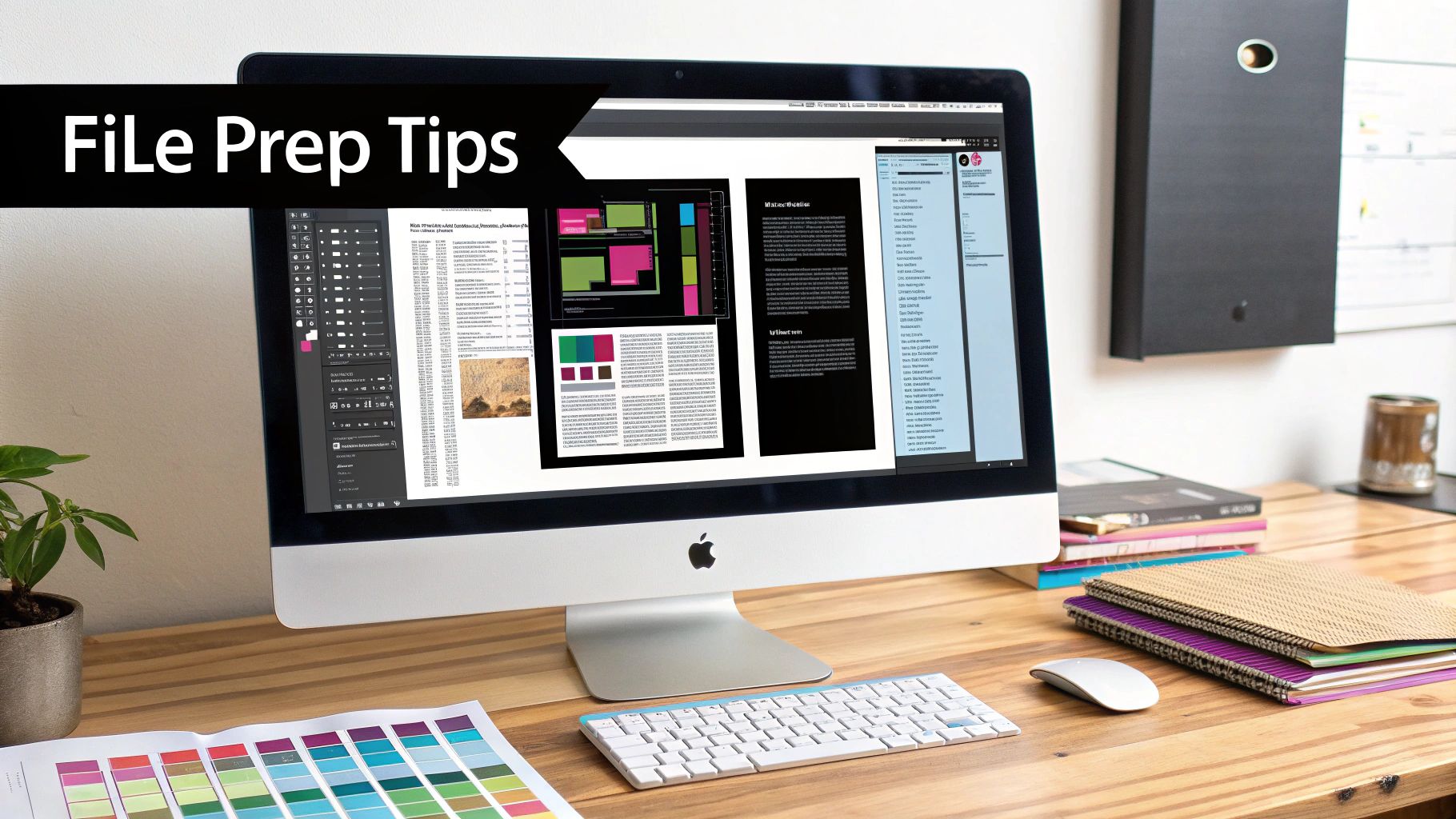
Picking the right binding is a great start, but the real magic happens in the design file. Honestly, spending a little extra time on file setup is the single best thing you can do to avoid headaches and ensure your finished booklet looks exactly how you envisioned it.
Different binding methods treat your pages in different ways, which means your design file needs to be adjusted accordingly. A file set up perfectly for perfect binding will run into some serious problems if you suddenly decide to go with saddle-stitching. Getting these details right from the beginning will save you time, money, and a whole lot of frustration.
Watch Out for Page Creep in Saddle-Stitched Booklets
When you're designing for saddle-stitching, you have to plan for something called page creep. It sounds weird, but it's a real thing. Because the pages are nested and folded together, the sheets in the middle of the booklet stick out a bit farther than the ones on the outside. When the booklet gets its final trim, this extra bit gets lopped off, making the center pages just a hair narrower than the cover.
This isn't a big deal on a skinny booklet, but once you start pushing 64 pages, it becomes really obvious. If you don't account for it, you could see your page numbers or text getting dangerously close to the edge—or worse, getting cut off completely.
The fix is pretty simple. Pro designers will gradually add a little more space to the outer margin on the pages as they get closer to the booklet's center. This little adjustment makes sure that after the final trim, all the margins look even and your design stays clean and professional.
Pro Tip: A good rule of thumb is to add an extra 1/8 inch to your outside margin for every 32 pages in a saddle-stitched booklet. That small shift is usually all it takes to counteract page creep and keep your layout looking sharp.
Setting the Gutter Margin Just Right
The inside margin, or gutter, is your best friend when working with binding styles that don't lay completely flat (like perfect binding) or that require holes to be punched (like spiral or wire-o). If that gutter is too tight, you risk losing text and images into the curve of the spine or having them punched right through.
A generous gutter just makes for a better reading experience. No one wants to have to crack the spine of a book just to read what it says in the middle.
- For Perfect Binding: We usually recommend a minimum gutter of 0.5 inches. If you have a really thick book, say over 150 pages, bumping that up to 0.75 inches or even 1 inch is a smart move.
- For Spiral and Wire-O Binding: Here, the gutter needs to be wide enough to leave room for the holes without clipping your content. Playing it safe with a 0.5 to 0.625-inch margin from the edge is the way to go.
And one final thing: always, always export your design as a print-ready PDF. Make sure you include proper bleeds (that’s where you extend your background images or colors 1/8 inch past the trim line) and crop marks. This gives the printer a clear guide for where to cut, guaranteeing that beautiful, professionally bound booklet you worked so hard on.
Finding a Partner for Professional Binding
Picking the right booklet binding can seem daunting, but it’s not a decision you have to make on your own. The best choice always comes down to matching your document’s purpose with your industry’s expectations, and an experienced print partner is your best asset in getting that fit just right. We’ve spent decades helping clients find the perfect binding for every single project.
This kind of partnership is more valuable than ever, especially as the technology behind it evolves. The global bookbinding machine market hit a value of US$6,411 million in 2024 and is expected to grow at a 5.2% CAGR. This shows a huge industry-wide push toward more advanced and automated binding processes. For you, that means professional printers can offer better and more efficient options than ever before. You can dive deeper into the growth in binding technology and see how it’s changing the game.
Why a Professional Partner Matters
Modern, state-of-the-art equipment is the only way to guarantee top-tier quality for everything from high-stakes marketing materials to dense training manuals and critical legal files. A professional team also gets the real-world pressures of tight deadlines and fixed budgets. That means you get fast turnarounds and clear, honest communication at every stage.
When you work with a print specialist, you're getting more than just access to machinery—you're getting real-world expertise. We know how to recommend budget-friendly booklet binding options that still deliver the high-impact finish your documents need to make a statement.
This kind of collaboration is especially important for specialized documents. Whether you’re creating spec books for an AEC firm, course packets for a university, or time-sensitive briefs for a legal team, having the right partner is what makes the difference between good enough and great.
At the end of the day, our job is to turn your ideas into polished, professionally bound booklets that work. From the first design conversation to the final local delivery, having an expert in your corner makes the whole process smooth and ensures the final product is perfect. Your documents deserve a finish that reflects the quality of the work inside them.
Got Questions About Booklet Binding? We've Got Answers.
Even after you've weighed all the options, a few lingering questions are perfectly normal. Getting these last few details right can make all the difference in your final product. Here are some of the most common questions we get from clients, answered to help you move forward with confidence.
What’s the Most Budget-Friendly Option for a Small Booklet?
Hands down, saddle-stitching is your most cost-effective choice for booklets under 64 pages. The process is simple and highly automated: we nest folded sheets together and secure them with staples along the spine.
This efficiency keeps costs low, making it the go-to binding for things like event programs, small catalogs, or any promotional piece where the budget is a key factor. It's fast, affordable, and looks great.
Which Binding Style Lets a Document Lie Completely Flat?
If you need your document to lie perfectly flat, you’ll want to look at spiral (coil), wire-o, or comb binding. These methods are fantastic because they allow the pages to flip a full 360 degrees around the spine.
This makes them ideal for any hands-free application—think cookbooks, training manuals, workbooks, or presentation decks.
- Spiral binding is a champ when it comes to durability, thanks to its flexible plastic coil.
- Wire-o binding offers a more polished, upscale look with its metal double-loop wire.
How Does My Paper Choice Affect the Binding?
The paper you choose plays a huge role in which binding methods are on the table. Heavier paper stocks add bulk fast. A booklet that would be fine for saddle-stitching with standard paper might become too thick with a premium, heavy-weight stock, forcing you into a method like perfect binding.
It's also critical to consider how paper interacts with glue in perfect binding. Some heavily coated or glossy papers don't absorb adhesive as well, which could compromise the strength of the spine over time. We always make sure your paper and binding choices are a perfect match.
What Is Page Creep, and How Do I Plan for It?
Page creep is something you only need to worry about with saddle-stitched booklets. Because the pages are nested inside one another, the sheets in the very center of the booklet will stick out farther than the ones on the outside. When the booklet gets its final trim, this excess is cut away.
The result? The innermost pages become slightly narrower than the outer pages. On a thick booklet, this can make your margins look off or even cut into your design. The fix is simple: just give your design more generous outer margins, especially on the pages closest to the center. This little bit of foresight ensures everything looks perfectly aligned and professional after trimming.
Ready to put the perfect finishing touch on your project? The team at Camelot Print & Copy Centers knows booklet binding inside and out. We’ll guide you to the best choice for a professional result every single time. Contact us today to get started on your project!