Choosing the right custom t-shirt is more than just picking a color and a logo; it's about selecting the printing method that best represents your brand, meets your budget, and delivers the quality you expect. With a vast landscape of t-shirt printing types available, from the classic feel of screen printing to the vibrant detail of Direct-to-Garment (DTG), making an informed decision can feel overwhelming. The technology you choose directly impacts the final look, feel, durability, and cost of your apparel.
This comprehensive guide breaks down the top 10 methods, detailing how each one works, its unique advantages, and the specific scenarios where it excels. Understanding these differences is crucial for anyone looking to produce high-quality custom garments. Whether you're ordering bulk promotional items for a trade show, creating premium uniforms for your team, or launching a limited-edition design, this roundup will equip you with the knowledge to print with confidence. To explore the full spectrum of possibilities, delve into various custom printing options that can transform your apparel. Our goal is to provide clear, actionable insights so you can achieve professional, high-impact results every time.
1. Screen Printing (Silk Screen Printing)
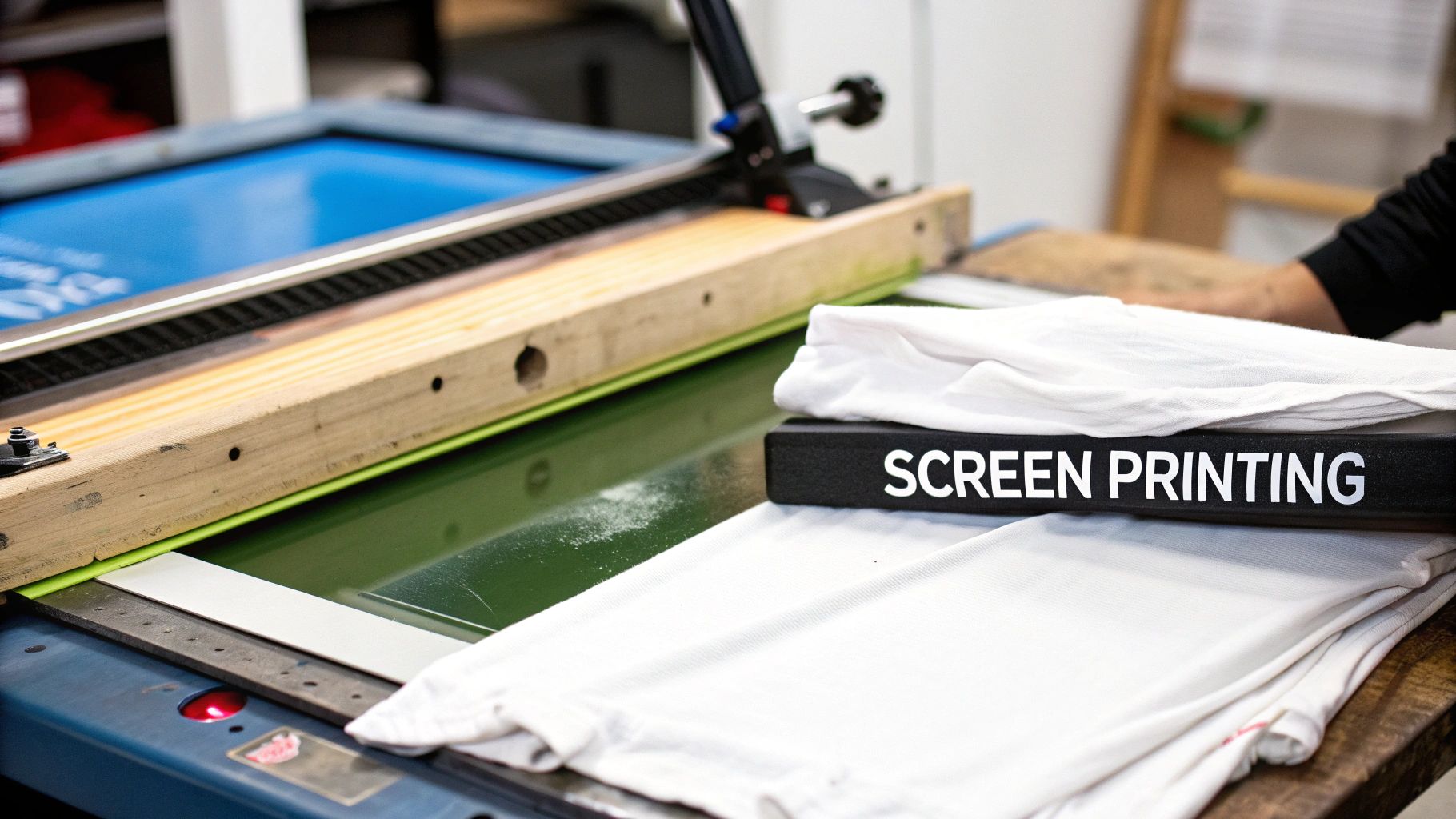
Screen printing, also known as silk screen printing, is a classic and highly reliable t-shirt printing method. It involves creating a stencil, or screen, for each color in a design. Ink is then pushed through the screen's mesh onto the fabric with a squeegee, applying one color at a time to build the final image. This technique is renowned for producing vibrant, durable, and professional-quality prints.
Best Use Cases & Design Considerations
Because of the initial setup required for each color, screen printing is most cost-effective for large-volume orders. This makes it the go-to choice for corporate events, team uniforms, promotional merchandise, and band t-shirts. The method excels with bold, solid-color graphics rather than photorealistic images with subtle gradients.
- Ideal Fabrics: Best results are achieved on 100% cotton, but cotton-polyester blends also work very well.
- Design Files: High-quality vector files (.AI, .EPS, .SVG) are essential for creating crisp, clean stencils. To ensure your artwork is print-ready, explore the differences between vector and raster images.
- Cost-Saving Tip: Limiting your design to 1-3 colors significantly reduces setup fees and per-shirt costs.
How It Works in Practice
Key Takeaway: Screen printing is the industry standard for large batch orders that require vibrant, long-lasting color on cotton-based apparel. Its economies of scale make it a top choice for businesses and organizations needing professional-grade custom t-shirts.
2. Direct-to-Garment (DTG) Printing
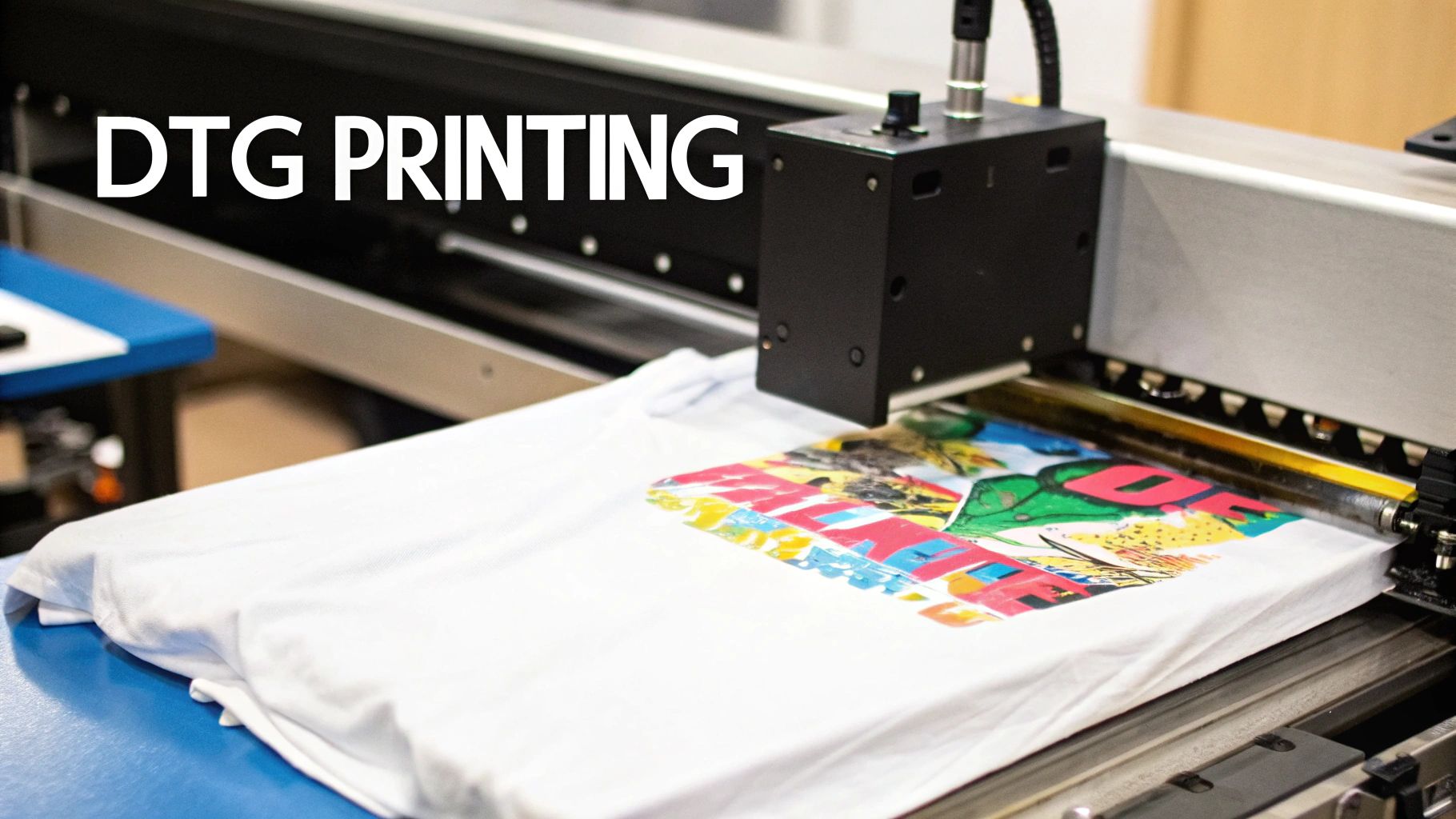
Direct-to-garment (DTG) printing is a modern technique that functions much like a standard office inkjet printer, but for apparel. It uses specialized technology to spray water-based inks directly onto the fabric, allowing for the creation of intricate, full-color, and photorealistic designs with remarkable detail. This method has revolutionized the industry by making small-batch and on-demand printing both accessible and affordable.
Best Use Cases & Design Considerations
With no per-color setup fees, DTG is the ideal choice for small orders or designs that require a high level of detail, such as photographs or artwork with complex gradients. It's perfect for on-demand merchandise for startups, personalized gifts, limited edition runs for artists, and event t-shirts where each one might have a unique element like a name.
- Ideal Fabrics: For the most vibrant results, 100% ring-spun cotton is recommended. Cotton-poly blends also work, but the colors may appear slightly more faded.
- Design Files: High-resolution raster images (.PNG, .TIFF) at 300 DPI are critical for achieving a sharp, high-quality print.
- Durability Tip: To maximize the life of a DTG print, wash garments inside-out with cold water and tumble dry on low heat.
How It Works in Practice
Key Takeaway: DTG printing is the best option for complex, full-color designs on small quantities of cotton garments. Its strength lies in producing high-fidelity, photorealistic images without the significant setup costs associated with other t-shirt printing types.
3. Heat Transfer Printing
Heat transfer printing is a versatile method that involves creating a design on special transfer paper or vinyl and then applying it to a t-shirt using heat and pressure. The design is first printed onto the transfer material, which then acts as a carrier. A heat press machine bonds the design to the fabric, resulting in a crisp, clean image that sits on top of the garment. This technique is an excellent bridge between traditional and modern t-shirt printing types.
Best Use Cases & Design Considerations
Heat transfer is ideal for small-batch orders, one-off custom designs, and full-color photorealistic images, as there are no complex screen setups. It is a popular choice for school spirit wear, customized team uniforms with individual names and numbers, and promotional items for tradeshows. The method handles intricate details and a wide spectrum of colors exceptionally well.
- Ideal Fabrics: Works on cotton, polyester, and cotton/poly blends. It is also suitable for non-traditional materials like nylon and some leathers.
- Design Files: High-resolution raster images (.PNG, .PSD, .JPG) are perfect for this method, as are vector files (.AI, .EPS) for vinyl transfers.
- Durability Tip: To maximize the print's lifespan, use high-quality transfer materials and pre-press the garment to remove any moisture before application.
How It Works in Practice
Key Takeaway: Heat transfer printing offers unparalleled flexibility for small orders and complex, full-color designs. It's a cost-effective solution for creating highly personalized apparel without the high setup costs of other methods.
4. Sublimation Printing
Sublimation printing is a unique and powerful method that infuses dye directly into the fabric's fibers. This process involves printing a design onto special paper with sublimation inks. A heat press then vaporizes the ink, which bonds with the polyester material at a molecular level, creating a permanent, fade-resistant, and peel-proof image. The result is a print you cannot feel, with unparalleled vibrancy and durability, making it one of the highest-quality t-shirt printing types available.
Best Use Cases & Design Considerations
Sublimation is the premier choice for all-over prints and full-color, photorealistic designs on performance apparel. It's perfect for custom sportswear, high-performance athletic wear, and premium branded merchandise where breathability and longevity are crucial. The dye doesn't create a layer on top of the fabric, so it never cracks or fades and doesn’t compromise moisture-wicking properties.
- Ideal Fabrics: This method works exclusively with 100% white or light-colored polyester fabrics. High-polyester blends (at least 65%) can be used, but the print will have a softer, more vintage look.
- Design Files: High-resolution raster images (.PNG, .JPG, .TIFF) are ideal, as sublimation excels at reproducing gradients, photographs, and intricate details.
- Cost-Saving Tip: While not a budget option, grouping orders for similar polyester garments can streamline the production process and potentially lower per-unit costs with your print provider.
How It Works in Practice
Key Takeaway: Sublimation printing offers the most durable and vibrant full-color prints for polyester garments. It is the gold standard for custom athletic apparel and any application requiring photorealistic imagery without compromising fabric feel or performance.
5. Vinyl Cutting and Heat Transfer Vinyl (HTV)
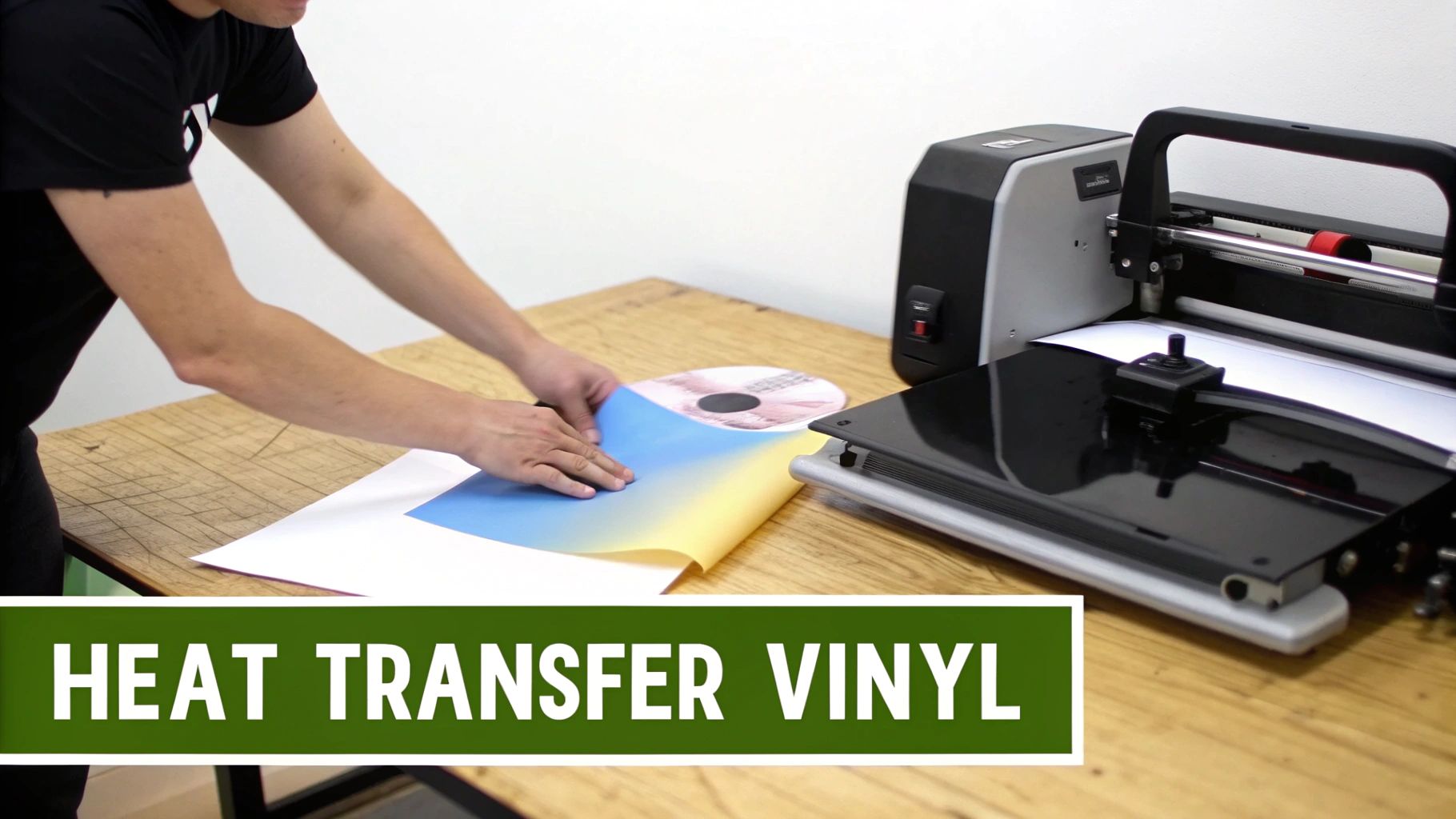
Vinyl cutting, often paired with Heat Transfer Vinyl (HTV), is a t-shirt printing method that uses a machine to precisely cut designs from sheets of colored vinyl. This cutout design is then positioned on a garment and permanently bonded to the fabric using a heat press. This technique is celebrated for producing crisp, bold, and highly durable graphics, making it a popular choice for custom apparel and small-batch orders.
Best Use Cases & Design Considerations
HTV excels at producing single-color designs, text, and logos with sharp edges, making it perfect for sports team uniforms, company branded wear, and school spirit apparel. Because each color requires a separate layer of vinyl, this method is best suited for simple graphics rather than intricate, multi-color, or photographic images. The variety of available vinyl finishes, like glitter, metallic, and holographic, offers unique creative possibilities.
- Ideal Fabrics: Works exceptionally well on cotton, polyester, and cotton/poly blends. It is also a great option for performance wear and other synthetic fabrics.
- Design Files: Simple vector files (.AI, .SVG) are perfect for vinyl cutting, as they allow the machine to create clean, precise cut lines.
- Application Tip: Always pre-press the garment for a few seconds before applying the vinyl. This removes moisture and wrinkles, ensuring a stronger and smoother bond.
How It Works in Practice
Key Takeaway: Heat transfer vinyl is one of the best t-shirt printing types for small orders that require durability and a vibrant, graphic look. It's an excellent, cost-effective solution for customizing individual names and numbers on team jerseys or creating standout promotional items.
6. Discharge Printing
Discharge printing is a unique t-shirt printing type that uses a chemical process to remove the dye from a dark garment, revealing the natural fabric color underneath. The process involves a special water-based ink mixed with a discharge agent. When heat is applied, this mixture bleaches the original dye and can simultaneously deposit a new pigment, resulting in an exceptionally soft and breathable print that feels like part of the fabric itself.
Best Use Cases & Design Considerations
This method is perfect for creating a soft, vintage, or premium look on dark-colored apparel where a heavy ink feel is undesirable. It's a top choice for high-end branded merchandise, luxury casual wear for boutique brands, and performance apparel where breathability is key. Because the process alters the fabric dye, the final color can have slight variations, adding to its unique appeal.
- Ideal Fabrics: Works best on 100% natural fibers, especially dark cotton garments (black, navy, charcoal). It is not suitable for polyester or synthetic blends.
- Design Files: High-contrast vector files (.AI, .EPS) are recommended. The final print color can be influenced by the original garment dye, so precise PMS color matching is difficult.
- Cost-Saving Tip: While more expensive than standard screen printing, using a "no-color" discharge (just the bleaching agent) creates a stylish tone-on-tone effect without adding ink costs.
How It Works in Practice
Key Takeaway: Discharge printing is the ultimate solution for achieving a super-soft, no-feel print on dark cotton t-shirts. It excels at creating premium, vintage-style apparel where comfort and quality are paramount.
7. Specialty Inks and Finishing Techniques
Specialty inks and finishing techniques elevate standard t-shirt printing types by adding unique textures, visual effects, and a premium feel. Instead of being a standalone method, these are enhancements applied through processes like screen printing. Options include puff ink for a raised 3D effect, metallic inks for shimmer, glow-in-the-dark inks for visibility, and foil applications for a brilliant shine. These finishes transform a simple garment into a high-impact promotional item or a piece of retail-quality apparel.
Best Use Cases & Design Considerations
These techniques are perfect for creating memorable merchandise that stands out. They are ideal for limited-edition apparel, premium corporate gifts, and promotional items for special events like nighttime concerts or product launches. Because these effects are often intricate and require precise application, they are best used as accent elements rather than for an entire design to maximize impact without overwhelming the garment.
- Ideal Fabrics: Compatibility varies by technique, but most work well on 100% cotton and high-cotton blends. Thicker fabrics often support heavier applications like puff ink better.
- Design Files: High-quality vector files (.AI, .EPS) are crucial, especially for detailed applications like foil. The design should clearly indicate which parts will receive the specialty finish.
- Cost-Saving Tip: Use a specialty ink for just one color or a key part of your design, like a logo or slogan. This provides a premium touch without the cost of applying a special finish to the entire artwork.
Key Takeaway: Specialty inks and finishes are powerful tools for increasing the perceived value and visual appeal of custom apparel, making them an excellent choice for brands wanting to create a lasting impression with premium, eye-catching t-shirts.
8. Embroidery and Stitched Apparel
While not a printing method in the traditional sense, embroidery is a premium apparel decoration technique that uses thread to stitch a design directly onto the fabric. This process creates a textured, three-dimensional result that conveys professionalism and high value. It is renowned for its exceptional durability, often outlasting the garment itself, making it a popular alternative to other t-shirt printing types.
Best Use Cases & Design Considerations
Embroidery is the definitive choice for corporate apparel, professional uniforms, and high-end promotional items where a sophisticated look is essential. It excels with logos, emblems, and text, making it ideal for branded polo shirts, jackets, hats, and workwear for law firms or AEC contractors. The process involves digitizing artwork into a stitch pattern, which is a one-time setup process.
- Ideal Fabrics: Works best on heavier, thicker materials like polo shirts, hoodies, jackets, and canvas. While possible on t-shirts, proper support is needed.
- Design Files: Clean vector files (.AI, .EPS) or high-resolution raster images are required for the digitizing process to create a precise stitch map.
- Pro Tip: To ensure high-quality results, especially on thinner garments, selecting the right backing is key. Success often depends on finding the best stabilizer for embroidery to prevent the fabric from puckering.
How It Works in Practice
Key Takeaway: Embroidery offers a durable, high-end finish that elevates branded apparel. It is the gold standard for professional uniforms and corporate wear that require a long-lasting and premium-quality design. To see how embroidery can enhance your brand’s look, explore our custom promotional items.
9. All-Over Printing (AOP) and Full Garment Coverage
All-over printing (AOP) is a high-impact technique where a design extends across the entire surface of the garment, including the sleeves, front, back, and even over seams. Unlike traditional placement prints, AOP creates a seamless, immersive visual experience. This effect is typically achieved through large-format sublimation or by printing on fabric panels before they are sewn together, ensuring complete design coverage.
Best Use Cases & Design Considerations
AOP is perfect for bold branding, limited edition apparel, and merchandise that needs to make a statement, such as for music festivals, creative agencies, or fashion-forward athletic brands. The key consideration is how the artwork will align across seams and different panels of the shirt, which requires meticulous planning.
- Ideal Fabrics: 100% polyester is required for dye-sublimation AOP to achieve maximum vibrancy and print quality.
- Design Files: Large, high-resolution raster files (.PSD, .TIFF) are necessary to cover the entire garment template without losing clarity.
- Design Tip: Create artwork with extra "bleed" (extending the design beyond the cut lines) to ensure the graphic reaches every edge after the garment is constructed.
How It Works in Practice
Key Takeaway: All-over printing is one of the most visually impressive t-shirt printing types, offering maximum brand real estate. It's the ultimate choice for creating unique, high-end apparel where the design itself becomes the fabric of the shirt.
10. Combination Printing Methods and Hybrid Approaches
Combination printing, often called a hybrid approach, leverages the unique strengths of multiple t-shirt printing types on a single garment. Rather than relying on one method, this advanced technique combines processes to create a truly custom and high-impact product. For instance, a durable screen-printed graphic can be paired with detailed embroidery for a premium logo, blending textures and finishes for a sophisticated result.
Best Use Cases & Design Considerations
This method is ideal for premium corporate apparel, high-end promotional merchandise, and professional uniforms where quality and brand representation are paramount. It allows businesses in sectors like architecture, law, and healthcare to create distinguished garments, such as a polo with an embroidered crest and screen-printed sleeve text. The key is to strategically assign each design element to the most suitable printing method.
- Ideal Fabrics: Premium garments like heavyweight cotton, performance polyesters, and tri-blends are recommended to support multiple high-quality application processes.
- Design Files: Separate, optimized files for each method are crucial (e.g., vector for screen printing, digitized for embroidery). Partnering with a skilled design team can help prepare your files; learn more about our graphic design services.
- Cost-Saving Tip: Group elements of similar colors for screen printing or vinyl to minimize setup fees. Reserve more expensive methods like embroidery for smaller, high-impact areas like a chest logo.
How It Works in Practice
Key Takeaway: Hybrid approaches offer the ultimate in customization and perceived value by combining the best features of different printing methods. This is the top choice for businesses wanting to create truly unique, premium apparel that stands out.
10-Method T-Shirt Printing Comparison
| Method | Implementation complexity | Resource requirements | Expected outcomes | Ideal use cases | Key advantages |
|---|
| Screen Printing (Silk Screen) | High — screen setup, multi-color registration, skilled operators | Mesh screens per color, squeegees, curing oven, bulk inks | Vibrant, very durable prints; cost-effective at high volumes; limited photographic detail | Large production runs, promotional apparel, schools, nonprofits | Low unit cost in bulk, excellent opacity, works with specialty inks |
| Direct-to-Garment (DTG) | Low–Medium — digital workflow, garment pre-treatment | DTG printer, pre-treatment solution, water-based inks, cotton-rich garments | Photo-quality full-color prints, quick turnaround, higher per-unit cost | Small batches, on-demand orders, artists, personalized items | No setup fees, unlimited colors, fast prototyping |
| Heat Transfer Printing | Low — design to transfer and heat press application | Transfer paper/film or vinyl, heat press, printable transfers | Good multi-color detail; visible transfer hand-feel; moderate durability | Small–medium runs, corporate/event graphics, school spirit wear | Lower setup cost than screen; works on light and dark fabrics; photographic capability |
| Sublimation Printing | Medium–High — requires polyester garments and precise heat | Sublimation inks, transfer paper, calibrated heat press, 100% or high-polyester fabrics | Permanent, exceptionally vibrant prints with no hand-feel; limited to light polyester | Athletic wear, full-coverage prints, premium promotional items | Best durability/colorfastness, seamless full-garment printing, photo-quality |
| Vinyl Cutting & HTV | Low–Medium — cutting, weeding, and heat-press application | Vinyl cutter, heat press, colored/specialty vinyl sheets | Bold, sharp solid-color graphics; very durable; limited gradients | Small orders, team uniforms, school and event wear | Fast turnaround, works on any fabric/color, specialty finishes available |
| Discharge Printing | High — chemical process, careful handling and expertise | Discharge paste, dark 100% cotton garments, ventilation and safety systems | Extremely soft, breathable prints integrated with fabric; subtle, professional look | Premium tees, athletic/performance wear, high-end branded apparel | Natural hand-feel, durable print that matches fabric texture |
| Specialty Inks & Finishes | Medium–High — precise application, special curing and care | Puff/metallic/glow inks, specialty finishes, experienced technicians | Distinctive, premium visual effects; variable durability and care needs | Premium event merchandise, limited editions, nighttime/promotional events | High visual impact, perceived value, pairs well with screen printing |
| Embroidery & Stitched Apparel | Medium–High — digitization and machine setup | Computerized embroidery machines, threads, digitized files, backing | Long-lasting, textured three-dimensional branding; higher cost and turnaround | Corporate polos, uniforms, professional and premium apparel | Extremely durable, professional appearance, premium tactile finish |
| All-Over Printing (AOP) | High — garment construction, panel alignment, color continuity | AOP-ready garments, sublimation/DTG panel printing, skilled production | Full-garment, immersive designs with high visual impact; higher cost | Events, festivals, creative branding, sports kits | Maximum brand visibility, bold creative expression across entire garment |
| Combination / Hybrid Methods | Very high — sequencing multiple techniques, coordinated production | Multiple printers/presses/embroidery, cross-trained production team | Optimized durability and aesthetics; complex, premium results; longer lead times | Premium branded apparel, complex multi-element designs, corporate identity packages | Balances strengths of methods, creative flexibility, best-fit results for complex designs |
Partner with Camelot for Your Perfect Print
Navigating the diverse landscape of t-shirt printing types can feel overwhelming, but it doesn't have to be. As we've explored, the journey from a digital design to a wearable, impactful piece of apparel is a matter of strategic selection. Each method, from the time-honored durability of screen printing to the photorealistic detail of Direct-to-Garment, offers a unique set of tools to bring your vision to life. Understanding the core differences is the first step toward making a powerful brand statement.
Key Takeaways for Choosing Your Printing Method
The most crucial takeaway is that there is no single "best" printing method; there is only the best method for your specific project. Your choice hinges on a balance of key factors. A high-volume order of staff shirts for an annual event might point directly to the cost-efficiency of screen printing, while a small batch of intricate, multi-colored designs for a boutique launch would be a perfect fit for DTG's versatility. Similarly, creating professional, textured logos for corporate uniforms immediately brings embroidery to the forefront, whereas vibrant, full-coverage art on performance wear is the exclusive domain of dye sublimation.
Pro Tip: Don't just consider the design and quantity. Think about the end-user's experience. Will the garment be worn for athletic activities, professional settings, or as a fashion statement? The desired feel, durability, and fabric type are just as critical as the visual aesthetics.
Turning Knowledge into Action
With a solid understanding of these different t-shirt printing types, you are now equipped to make informed decisions that align with your budget, timeline, and quality expectations. The next step is to translate this knowledge into a tangible plan.
- Finalize Your Design: Ensure your artwork is in a high-resolution format suitable for printing.
- Define Your Audience & Purpose: Clarify who will wear the shirt and for what purpose. This will guide your fabric and print method selection.
- Determine Your Order Volume: Your quantity will be one of the biggest factors influencing cost and method feasibility.
- Consult with an Expert: Partner with a printing professional who can validate your choice and optimize your design for the best possible outcome.
Ultimately, mastering these concepts allows you to move beyond simply putting a logo on a shirt. It empowers you to create custom apparel that is not just a promotional item but a genuine reflection of your brand's quality and identity. The right print transforms a simple garment into a powerful marketing tool, a symbol of team unity, or a piece of wearable art that people are proud to display. Your brand deserves that level of intention and quality.
Ready to bring your custom apparel project to life with confidence? The experts at Camelot Print & Copy Centers have the state-of-the-art technology and deep industry knowledge to guide you through every one of these t-shirt printing types. Visit Camelot Print & Copy Centers to get a quote and let our team help you create the perfect print today.