When you need a print that makes a real impact but isn't quite a full-blown poster, the 13x19 paper size is your go-to. Known in the industry as Super B or A3+, this format gives you a generous canvas that stands out from the usual office documents, perfect for everything from stunning photo prints to crisp architectural proofs.
Unlocking the Potential of 13x19 Paper Size
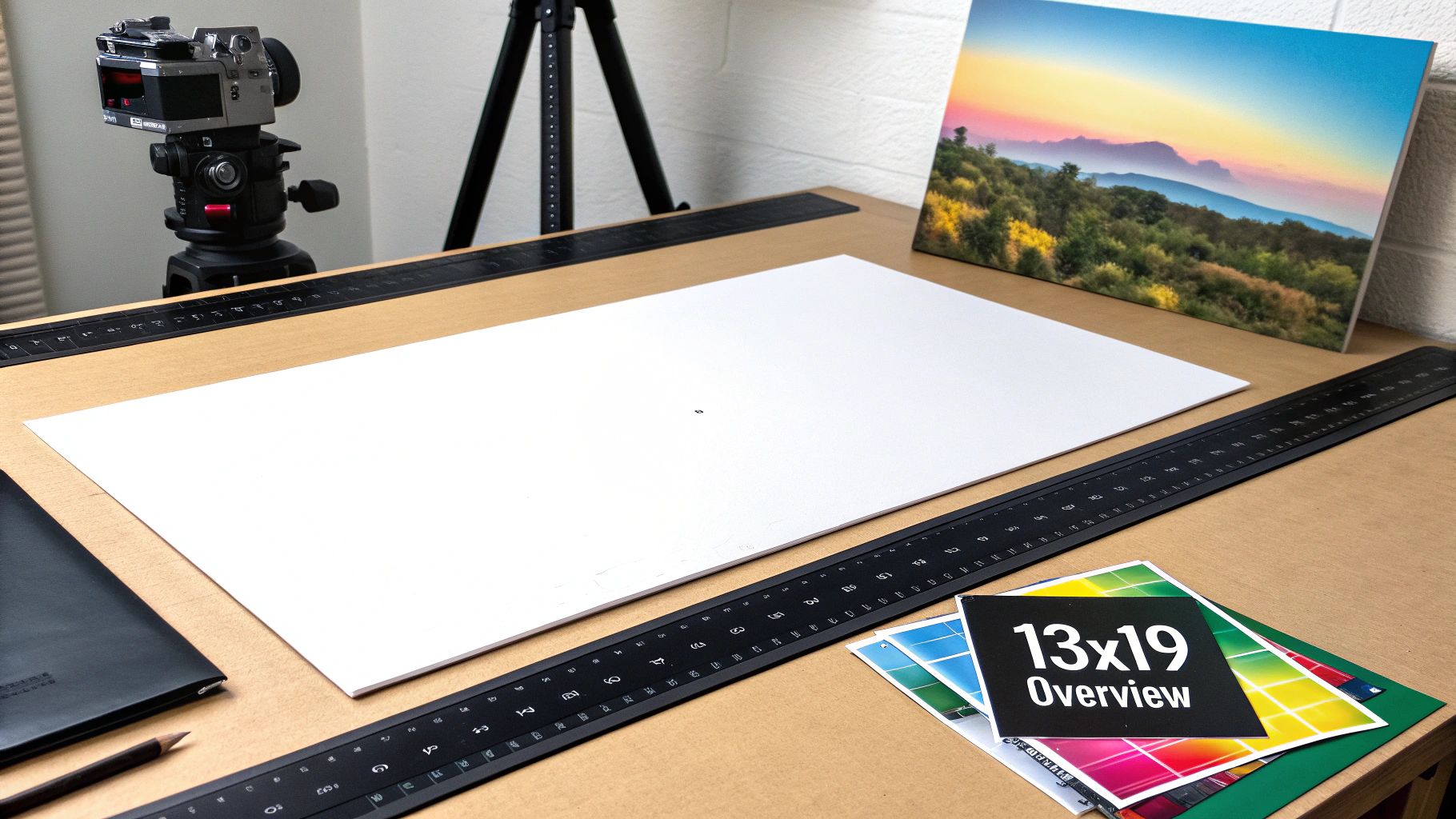
Think of 13x19 as the sweet spot in professional printing. It’s a significant step up from standard letter or even 11x17 tabloid paper, but it doesn't usually demand the specialized, wide-format printers that larger jobs require. This makes it an incredibly accessible secret weapon for anyone looking to create professional-grade work.
The exact dimensions are 13 x 19 inches, which translates to 330 x 483 millimeters. But this size isn't random—it's cleverly designed with a specific purpose in mind, especially for professionals.
The Full Bleed Advantage
So, what's the magic behind these dimensions? It's all about achieving a perfect "full bleed" on a 12x18 inch design. A full bleed is a printing term for when the color and images on a page run all the way to the very edge, with no white border. It’s what gives professional prints that polished, finished look.
To get that effect, you can't just print on a 12x18 sheet. You have to print the design on a larger piece of paper and then trim it down. The 13x19 size gives just enough extra room on all sides for the printer to work its magic, ensuring that when we trim it down to 12x18, the artwork is flawless from edge to edge.
The 13x19 paper size is the 'just right' solution for so many projects. It provides the necessary real estate for impactful visuals and full-bleed finishes that elevate the final product from good to great.
This capability is a game-changer for producing professional materials like:
High-quality art prints and posters
Detailed architectural drawings
Eye-catching marketing collateral
Accurate proofing prints before a large run
To put it all in perspective, here’s a quick summary of what makes the 13x19 size so useful.
13x19 Paper Size at a Glance
This table shows why 13x19 isn't just another paper size—it’s a purpose-built tool for achieving a higher standard of print quality.
So, Why Do Pros Love the 13x19 Format?
It's one thing to know the dimensions, but the real reason 13x19 paper has become a creative and professional staple is its sheer versatility. This is the size people in the know grab when standard office paper just won't cut it, but a massive banner feels like overkill. It hits a sweet spot that makes it a powerful tool for all sorts of projects.
Think of it as the 'Goldilocks' of paper sizes—it’s just right. You get way more visual breathing room than an 11x17 sheet, letting your designs pop without getting into the logistical headaches of much larger formats.
A Secret Weapon for Marketing and Promotions
For any business, 13x19 is perfect for creating marketing pieces that actually get noticed. The generous size is ideal for short-run posters, eye-catching brochures, and detailed product catalogs. When a potential customer holds a piece this substantial, it just feels more premium, which instantly boosts how they see your brand.
This format really changed the game, especially for small and mid-sized businesses that wanted high-impact visuals without a massive budget. By the mid-2010s, it was a standard offering right alongside 8.5x11 and 11x17 in professional print shops. For more background on how print services evolved, the Puget Sound University website offers some great insights into common paper offerings.
The magic of 13x19 is its blend of impact and efficiency. You can run vibrant, full-bleed designs that grab attention in a crowded space, all while keeping costs reasonable for smaller print jobs.
This efficiency is a lifesaver for projects like:
Event Posters: Perfect for announcing a local concert or in-store sale with a size that’s visible from across the room.
Oversized Menus: Gives restaurants the canvas to showcase their dishes with beautiful photos and easy-to-read text.
Portfolio Prints: Lets photographers and designers present their work with the stunning detail it deserves.
Indispensable in Technical and Creative Fields
The appeal of 13x19 paper goes way beyond marketing. Ask any architect, engineer, or designer—that extra space is a lifesaver for creating clear, readable drawings and spec books. When every little detail matters, you simply can't afford to cram complex information onto a smaller sheet.
This format allows technical documents to be presented with the clarity and professionalism they require. Those extra inches mean intricate line work, detailed notes, and complex diagrams are all perfectly legible. This helps prevent costly mistakes and keeps everyone, from the client to the contractor, on the same page.
At the end of the day, picking the right paper size isn't just about looks; it’s a practical choice that can make or break a project. It’s what turns a simple print into a truly professional asset.
Comparing 13x19 with Other Common Paper Sizes
To really get a feel for why 13x19 paper is so useful, it helps to see how it stacks up against other popular sizes you might run into. It’s easy to think, "What's an inch here or there?" But in professional printing, those small differences can make or break a project. The most frequent comparisons are with 11x17 and 12x18 paper.
Each of these sizes has its own job. For instance, 11x17, often called Tabloid, is a workhorse in many offices for things like large spreadsheets or internal diagrams. But the game changes completely when you need a "full-bleed" design—where your colors and images go right to the very edge of the paper. That's where 13x19 steps in and saves the day.
How 13x19 Stands Out
The 13x19-inch sheet, sometimes known as Super B, is a favorite in high-quality printing. It measures 330mm x 483mm, giving it a whopping 52% more surface area than a standard 11x17 sheet. This isn't just about making things bigger; it's about giving your designs room to breathe and allowing for professional finishing techniques. You can learn more about how these sizes fit into international paper standards on Wikipedia.
That extra real estate is the secret sauce. It provides the critical space a printer needs to print beyond the edge of a 12x18 design. After printing, we trim the sheet down to its final size, leaving you with a clean, perfectly borderless result. Without that "bleed room," you'd be stuck with thin, unprofessional-looking white slivers along the edges of your finished piece.
This concept map breaks down how different pros—from marketing teams to engineers—use the 13x19 size to their advantage.
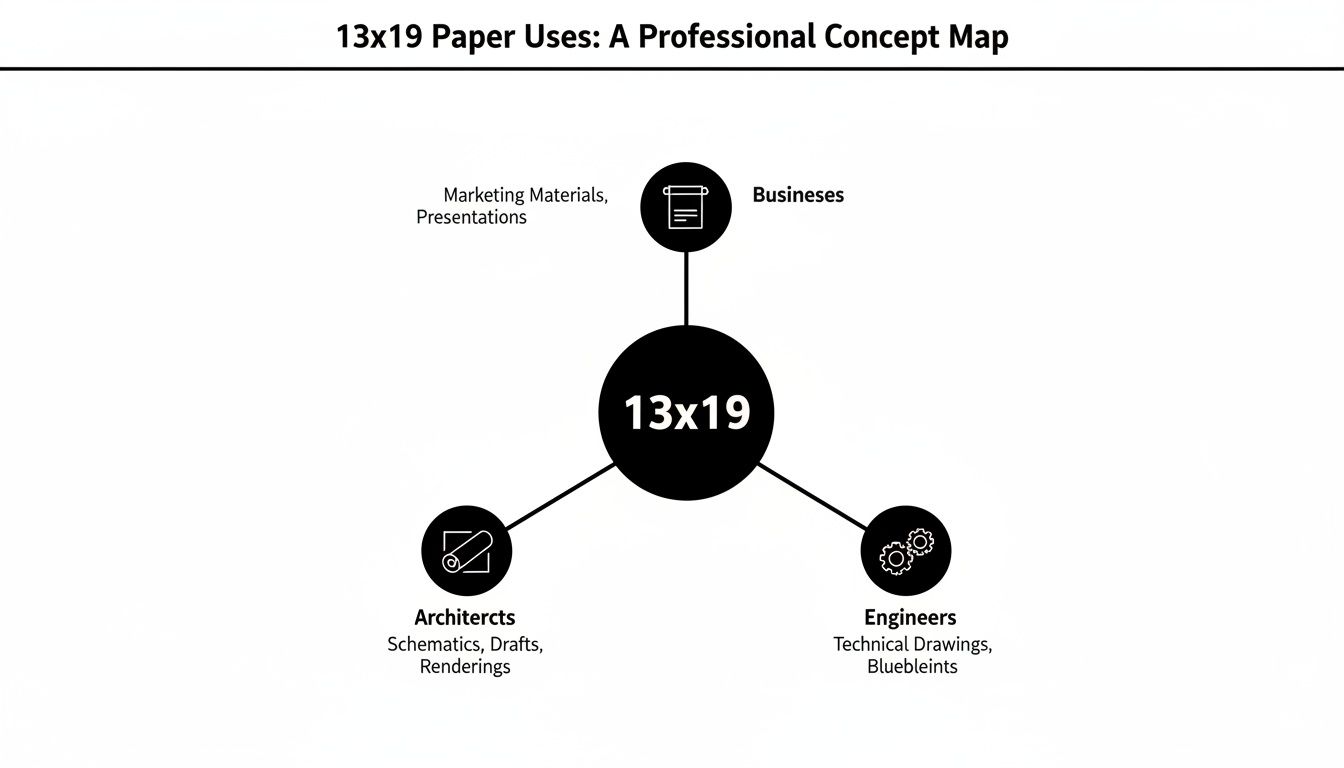
As you can see, whether it's for eye-catching posters or crisp architectural plans, the format's ability to handle full-bleed printing and fine detail is its main draw. Let's put these sizes head-to-head.
A Side-by-Side Look
Sometimes, seeing the numbers side-by-side makes everything click. Here’s a simple table to show you where each paper size fits in.
Paper Size Comparison 13x19 vs Tabloid and 12x18
Ultimately, choosing the 13x19 paper size is a strategic move. You're not just picking a bigger piece of paper; you're unlocking a more professional production process that guarantees a polished, flawless finish for your most important creative projects.
Choosing the Right Paper Stock and Finish
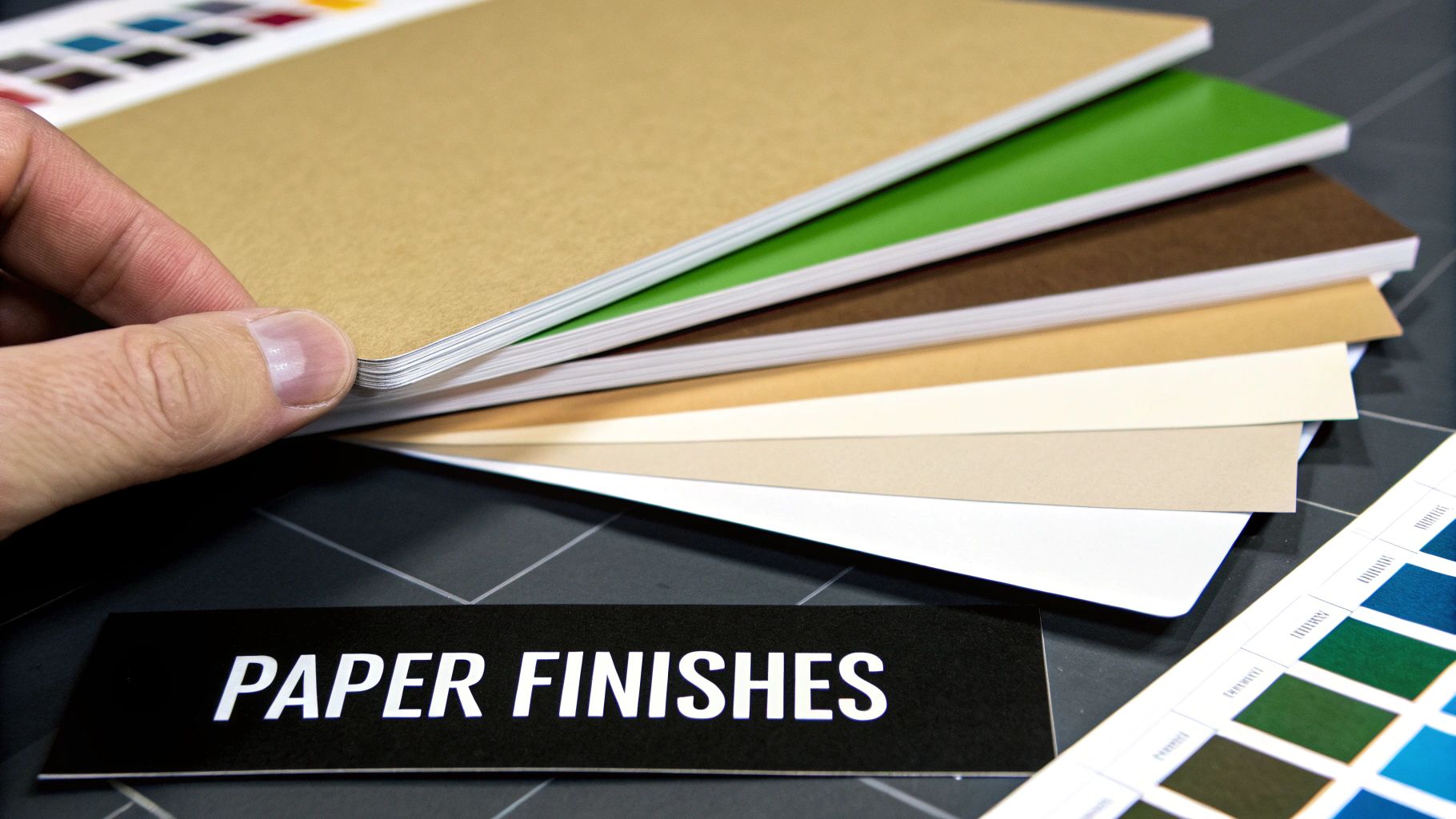
So, you've landed on the 13x19 paper size. That's a great start, but the real fun begins when you match your design with the right paper. The paper stock and finish you choose will completely change how people feel about your print.
Think of it this way: the weight and texture of the paper are part of the message. It's the first thing someone notices when they pick it up. Getting this right is what separates a decent print from a truly memorable one.
Decoding Paper Weight
When we talk about paper weight, we're talking about its thickness and sturdiness, usually measured in pounds (lb). A higher number means a thicker, more substantial sheet. The key is to match the paper's feel to its job.
Lightweight Stock (60-80 lb): This is your everyday paper, perfect for things like architectural plans, internal proofs, or drafts. It’s affordable and flexible but not built to last.
Medium-Weight Stock (80-100 lb): This is a fantastic all-rounder. It strikes a great balance, giving you a more premium feel for flyers, event posters, and brochures without the stiffness of a heavy cardstock.
Heavyweight Cardstock (100 lb+): When you need something that feels important and holds up to handling, this is what you want. Think art prints, high-end invitations, or portfolio pieces.
If you're curious and want to get into the weeds of how this is all measured, you can learn more about what paper weight points mean and how it all translates to your project.
Selecting the Right Finish
The finish is all about how the paper's surface handles light, which has a huge impact on how your colors look. For a 13x19 paper size project, you’ll most likely be choosing between glossy and matte. Each has its own personality.
The finish on your paper is like the final filter on a photograph. It can make colors pop, kill annoying glare, and set the whole mood of your piece.
In the world of professional photography and art, the 13x19 format is a star for a reason—it produces prints that look like they belong in a gallery. Artists often lean toward heavier stocks, from 216-271 gsm, for their archival quality. These papers can show 92% fade resistance over 100 years, a testament to their longevity under professional standards.
Here's a quick rundown of your main options:
Glossy Finish: A shiny, reflective surface that makes colors look super bright and saturated. It's a fantastic choice for anything with bold photos, like marketing posters or promotional slicks where you need the visuals to jump off the page.
Matte Finish: This finish gives you a smooth, non-reflective surface for a more subtle and elegant feel. It completely cuts down on glare, which makes it perfect for prints with a lot of text, fine art reproductions, or designs with a softer color scheme.
How to Prepare Your Files for Flawless Printing
Even the most brilliant design can fall flat if the print file isn't set up correctly. To make sure your vision comes to life on 13x19 paper, a few simple setup steps are non-negotiable. This isn't about getting lost in technical jargon; it's about giving your printer the right instructions to get the job done perfectly the first time.
Think of your digital file as the blueprint for your project. If that blueprint has fuzzy lines or wrong measurements, the final result will look off. Taking a few minutes to nail down the settings will save you the headache and cost of a reprint.
Getting the Bleed Just Right
The single biggest giveaway of an amateur print job is a missing bleed. A bleed is a small, extra margin of your design that extends beyond the final trim line. For any 13x19 paper project that will be cut down, we recommend a standard bleed of 0.125 inches (or 1/8") on all four sides.
So, why is this so important? This little bit of extra image area gives the cutting machine a margin for error. Without it, you risk seeing thin, unintentional white slivers along the edges of your finished piece. With a bleed, your background colors and images will stretch perfectly from edge to edge.
If you want to learn more, check out our guide on what a print bleed is for a deeper dive.
Setting up a proper bleed is non-negotiable for a professional finish. It’s the difference between a print that looks homemade and one that looks polished and ready for business.
Resolution, Color, and File Formats
Beyond the bleed, a few other key details can make or break your print quality. Getting these right is the secret to sharp images and vibrant, accurate colors.
Resolution (DPI): Your entire file, including all images, needs to be set to 300 Dots Per Inch (DPI). Web images are typically 72 DPI, which looks fine on a screen but will appear blurry and pixelated when printed, especially on a larger format like 13x19.
Color Mode (CMYK): Computer monitors use the RGB (Red, Green, Blue) color model to display images, but commercial printers use CMYK (Cyan, Magenta, Yellow, Black) ink. To avoid disappointing color shifts, it's best to design in CMYK from the very beginning.
File Format: The gold standard for submitting print jobs is a press-quality PDF. This format neatly bundles all your fonts, images, and layout information into a single, self-contained file. Nothing gets lost, and nothing changes when we open it on our end.
These best practices are universal in the world of professional printing. The same attention to detail required for great-looking posters is also essential for things like successful file preparation in self-publishing. Mastering these basics ensures your project always looks exactly how you imagined it.
Partner with the Pros for Your 13x19 Printing
Sure, you can try to wrangle a 13x19 paper size project on your own, but some jobs just demand a level of precision that only a professional can deliver. When your brand's reputation is on the line, partnering with a dedicated print expert is what turns a good idea into a finished product you can be proud of.
Think of a professional printer as a master craftsperson. We have access to finely-tuned equipment that produces vibrant, consistent colors and razor-sharp details that a standard office machine could never hope to match. This means your posters, proofs, and marketing materials will have the genuine professional impact they deserve.
The Value of a Second Set of Expert Eyes
One of the biggest reliefs of working with a pro is the expert oversight. A trained eye can spot potential disasters—like a logo that's too fuzzy or a file setup that's going to look terrible in print—before they become expensive mistakes. That kind of proactive quality control saves you time, stress, and the dreaded cost of a reprint.
At Camelot, our team is obsessive about the details, checking everything to ensure your project is perfect from start to finish. This commitment is at the heart of our professional print and copy services.
Working with a print expert is an investment in peace of mind. You’re not just buying ink on paper; you're gaining access to better technology, deeper expertise, and a team that’s genuinely invested in your project’s success.
Beyond just the final quality, a professional partnership brings serious efficiency and support to the table. You get to tap into:
Fast, Reliable Turnarounds: We get it—deadlines are real and they matter. Our workflow is built to get your job done on time, every time, without cutting corners on quality.
In-House Design Help: Is your file just not quite right? Or do you need an idea fully brought to life? Our in-house graphic designers are here to help, ensuring your vision is print-ready and perfectly executed.
Smarter, Cost-Effective Printing: By catching errors early and using the right equipment for the job, we help you avoid waste and get the most value from your budget.
Ultimately, bringing in a print expert elevates your project. It ensures every single piece you create on the versatile 13x19 paper size is a powerful reflection of your brand’s commitment to quality.
Got Questions About 13x19 Paper?
Alright, let's tackle some of the common questions that pop up when working with 13x19 paper. Getting these details straight from the start is the key to a smooth project and a final print you'll be proud to show off.
Think of this as a quick-reference guide to give you that last bit of confidence before you send your files off to print. We'll cover everything from what to call it to how to set up your files.
What Is Another Name for 13x19 Paper?
It’s easy to get confused because you'll hear 13x19 paper called a few different things in the industry. Don't let the jargon trip you up—it's all the same sheet of paper. The two main aliases you’ll run into are:
Super B: This is a popular term in North American print and design circles. It’s a simple way to say, "it's bigger than the standard B-size," which is Tabloid (11x17).
A3+: You'll hear this name more often in international contexts. It just means the sheet is a bit larger than a standard A3 sheet, giving designers and photographers extra room for bleeds.
Knowing these terms helps you speak the same language as your printer and ensures there are no mix-ups.
Can My Home Printer Handle 13x19 Paper?
For almost everyone, the answer is a firm no. Your standard printer sitting in your home or office is built for Letter (8.5x11) and maybe Legal (8.5x14) paper. Even the bigger office multifunction machines usually top out at Tabloid (11x17).
Printing on a 13x19 sheet requires a professional wide-format or photo printer—the kind of specialized equipment built specifically for larger media. Trying to feed this size into a standard printer just won't work, which is why teaming up with a professional print shop is the best way to go.
The 13x19 format is a professional tool that demands professional equipment. Your desktop printer simply doesn’t have the physical capacity to handle its size.
What Resolution Do I Need for a 13x19 Print?
This one is absolutely critical. For a large canvas like 13x19, your image resolution makes the difference between a crisp, stunning print and a blurry, pixelated mess. The industry standard for high-quality printing is 300 Dots Per Inch (DPI), and your files need to be set to this resolution at their final size.
So, what does that look like in practice? If you have an image meant to cover the entire sheet, it needs to be at least 3900 pixels wide by 5700 pixels tall (that’s 13 inches x 300 DPI and 19 inches x 300 DPI). Grabbing a low-resolution image from the web, which is usually just 72 DPI, will look terrible when printed this large. Always, always check your resolution before you finalize your design.
Ready to create stunning, professional-quality prints for your next project? The experts at Camelot Print & Copy Centers are here to help you with everything from file setup to final production. Start your order online or contact our team for a custom quote today!