Great food alone won't cut it anymore. That's just the table stakes in this industry. Real restaurant branding is the entire story you weave—from the first Instagram post a customer sees to the feeling they take with them long after they've paid the bill. It's that gut-level connection that turns a curious visitor into a loyal regular.
Why Your Brand Is the Secret Ingredient

In a sea of dining options, a memorable brand is what makes you stand out. It’s not just about a cool logo; it’s about creating a complete sensory experience that speaks directly to the people you want to serve. Customers connect with brands emotionally, and a strong identity builds the trust, excitement, and sense of belonging that keeps them coming back.
Here’s a practical way to think about it: your brand is what makes someone see your burger as an unforgettable $18 experience, not just a generic $9 meal. That perception is built across dozens of small interactions, and each one is a chance to tell your story.
Forging That Emotional Connection
Every single detail plays a part in building that crucial bond with your guests. When you get it right, all these elements sing in harmony, creating an identity that feels genuine and reliable. A few places this really comes to life include:
- The Vibe: The music you play, the dimness of the lights, the art on the walls—it all sets a mood the second someone walks through the door.
- Your Service: Is your staff polished and formal, or are they high-fiving regulars? That personality shapes the entire guest experience.
- Your Online Footprint: The tone of your social media posts and the look of your website need to feel like they belong to the same restaurant your guests visit in person.
- Your Printed Materials: Everything from the weight of the menu in their hands to the design on the takeout bag is a piece of your story.
A unified approach like this turns your restaurant from just a place to eat into a destination people feel a part of. To see how your physical materials can amplify this feeling, take a look at our guide to printing solutions for food services.
The real goal? To become unforgettable. A powerful brand creates an emotional tie that makes customers pick you over everyone else, every time. It’s about cultivating loyalty that goes way beyond what’s on the plate.
When all these pieces click into place, your brand becomes your promise—a promise of a specific experience your guests can rely on. Fulfilling that promise, day in and day out, is how you build the trust and loyalty that keep your tables full.
Laying the Foundation: Your Restaurant's Brand Strategy
Before you even think about a logo or what your menus will look like, the real work begins. The most successful restaurant brands are built on a solid strategic foundation—it’s the blueprint that guides every single decision you'll make down the road. Skipping this step and jumping straight into design is like trying to build a house without a foundation. It might look nice for a little while, but it won't last.
This whole process is about answering some tough but essential questions. Who are you really trying to serve? And in a sea of other restaurants, what makes you different? Getting clear on these answers is what will separate you from the pack.
Who Are You Cooking For? Define Your Ideal Customer
Here’s a hard truth: you can't be everything to everyone. When you try to please the masses, you usually end up with a brand that feels generic and doesn't truly connect with anyone. The first, and most important, part of your strategy is to get crystal clear on who you want walking through your doors.
And I mean really clear. Don't just stop at basic demographics like age or income. You need to dig into their lifestyle, what they care about, and what motivates them.
- What's their life like? Are they a busy professional grabbing a quick power lunch, or a family looking for a special place to celebrate a birthday?
- What do they actually want from a meal out? Is it all about speed and convenience? A quiet, intimate atmosphere? Or are they adventurous eaters seeking bold, new flavors?
- Where do they spend their time online? Knowing this tells you exactly where you need to be to get their attention.
This is where creating a detailed "customer persona" becomes your secret weapon. For example, let's say you're opening a fast-casual salad spot. Your ideal customer might be "Healthy Holly," a 32-year-old yoga instructor who values organic ingredients and sustainable packaging. Now, every decision you make—from the menu to your Instagram posts—can be filtered through one simple question: "What would Holly love?"
Scope Out the Competition
Once you know who you’re talking to, you need to see who else is trying to get their attention. Sizing up the competition isn't about stealing their ideas. It's about finding the gaps in the market—the things they aren't doing. Your unique selling proposition (USP) is hiding in that unclaimed space.
Go visit your top three competitors. And don't just order the food. Sit there and soak it all in. What’s the vibe? Who are their customers? Pay close attention to what they’re doing well, but more importantly, look for where they’re dropping the ball. Maybe their service is painfully slow, the decor feels stuck in the 90s, or their social media is a ghost town.
Your brand's power comes from doing what your competition can't—or won't. This is what makes a customer drive past three other places to get to yours.
Find Your "Why" and Your Voice
Your mission statement isn’t just some fluffy sentence to stick on your website. It's your reason for being, boiled down to its core. It’s the "why" that gets you out of bed in the morning. A farm-to-table bistro, for instance, might have a mission like: "To connect our neighbors with the bounty of local farms, one delicious plate at a time." This single idea should touch everything you do.
From that mission, your brand voice will naturally emerge. Are you cheeky and playful? Upscale and sophisticated? Or maybe you're warm and a little bit quirky. Whatever it is, that voice needs to show up everywhere—from how your hosts greet people at the door to the words you use on your menu. A consistent voice builds familiarity and trust, making your brand feel less like a business and more like a friend.
With these strategic pieces in place, you're finally ready to bring your brand's personality to life visually. When you need a hand translating that vision into tangible things like menus, signage, and packaging, we’re here to help make sure every piece perfectly reflects the strategy you’ve worked so hard to build. Get a quote to start your project.
Crafting a Memorable Visual Identity
With your brand strategy nailed down, it's time for the fun part: bringing your restaurant's personality to life visually. This is where your brand gets a face—a look and feel that customers can connect with. Think of it as the complete visual system that makes your restaurant unmistakable, whether someone spots it on a tiny phone screen or a huge billboard.
This isn't just about making things look good. Your visual identity is a silent storyteller, communicating your brand’s essence without a single word. When done right, it builds the kind of recognition and trust that keeps people coming back.
Designing a Logo That Lasts
Your logo is the anchor of your entire visual brand. It has to be memorable and versatile enough to look sharp everywhere, from the corner of a menu to a social media profile pic. It's your brand's signature.
The biggest mistake I see is chasing trends. A logo that looks cool today might feel dated in a year. Instead, aim for a timeless design that truly captures what your restaurant is all about. A rustic, farm-to-table spot might go for something hand-drawn and organic, while a sleek sushi bar would be better served by clean lines and modern fonts. If you're looking for a hand in this, you might be interested in our professional graphic design services to help bring your vision to life.
This chart really breaks down how you get from customer insights to a solid brand identity.
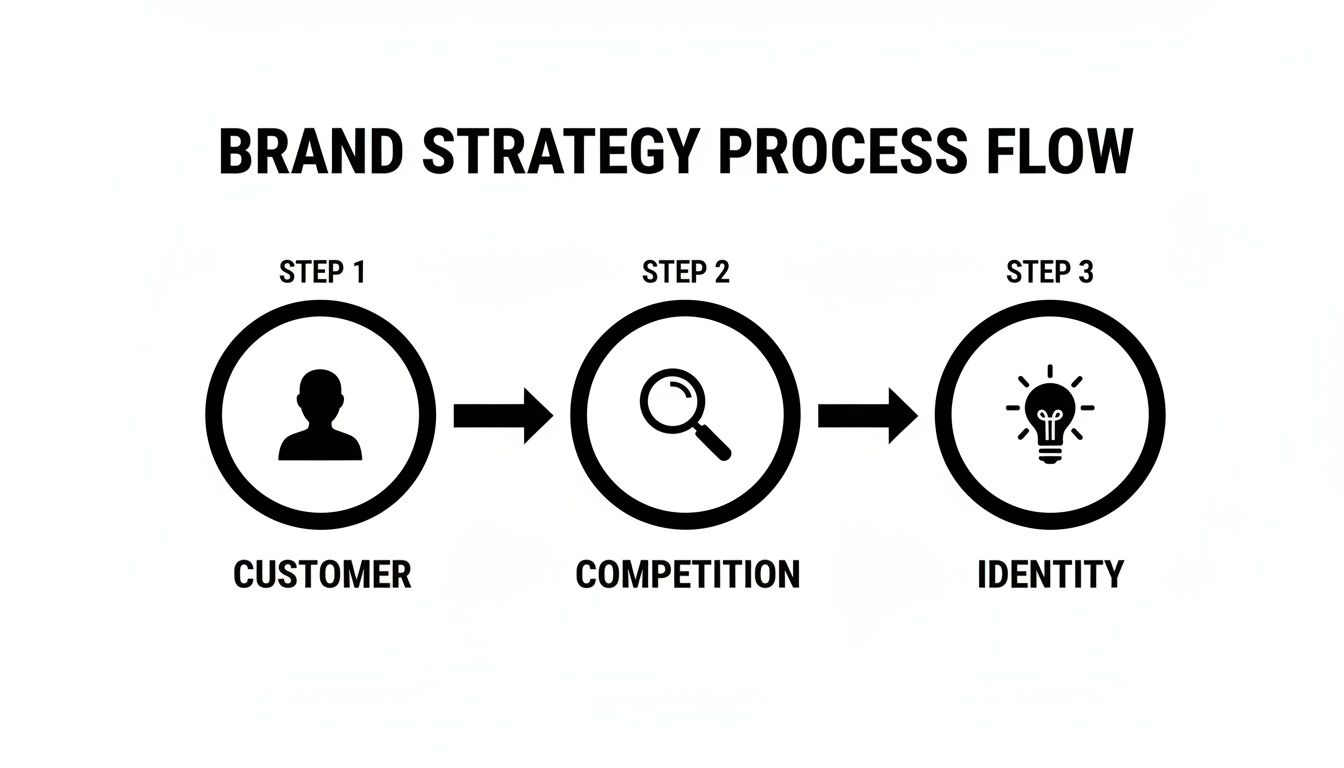
As you can see, understanding your audience and your competition is the foundation for creating a brand that truly stands out.
Choosing Your Colors and Typography
Colors and fonts are powerful tools that set the mood. It’s no secret that warm colors like reds and oranges can actually stimulate appetite, which is why you see them in so many fast-casual spots. On the other hand, blues and greens tend to create a more relaxed, calming vibe. Your color palette should be a direct reflection of the dining experience you want to offer.
Typography—the fonts you choose—is your brand’s voice. A flowing script can feel elegant and upscale, while a bold, sans-serif font comes across as modern and confident. The trick is to select a primary and secondary font that not only look good together but are, most importantly, easy for your customers to read on menus and signs.
A consistent visual identity is a powerful business tool. Brands that maintain a unified look across all materials see up to a 23% higher customer recognition rate, a massive advantage in a competitive market.
This consistency is what turns a collection of design elements into a cohesive brand people remember and trust.
Developing a Consistent Imagery Style
The photos on your website, social media, and menus are a huge piece of the puzzle. They all need to feel like they belong to the same family, whether your style is bright and airy or dark and moody. This consistency is absolutely critical for building a brand that people recognize at a glance.
To keep your food photography—like those popular overhead shots—looking sharp and on-brand every time, you could use tools like food overhead flat lay presets. It's a simple way to maintain a professional, cohesive look.
Here's a quick look at the core visual elements and why they matter.
Core Visual Branding Elements Breakdown
Each of these pieces has to work in harmony with the others to create a strong, unified brand presence that resonates with your target audience.
Bringing Your Brand to the Table with Print
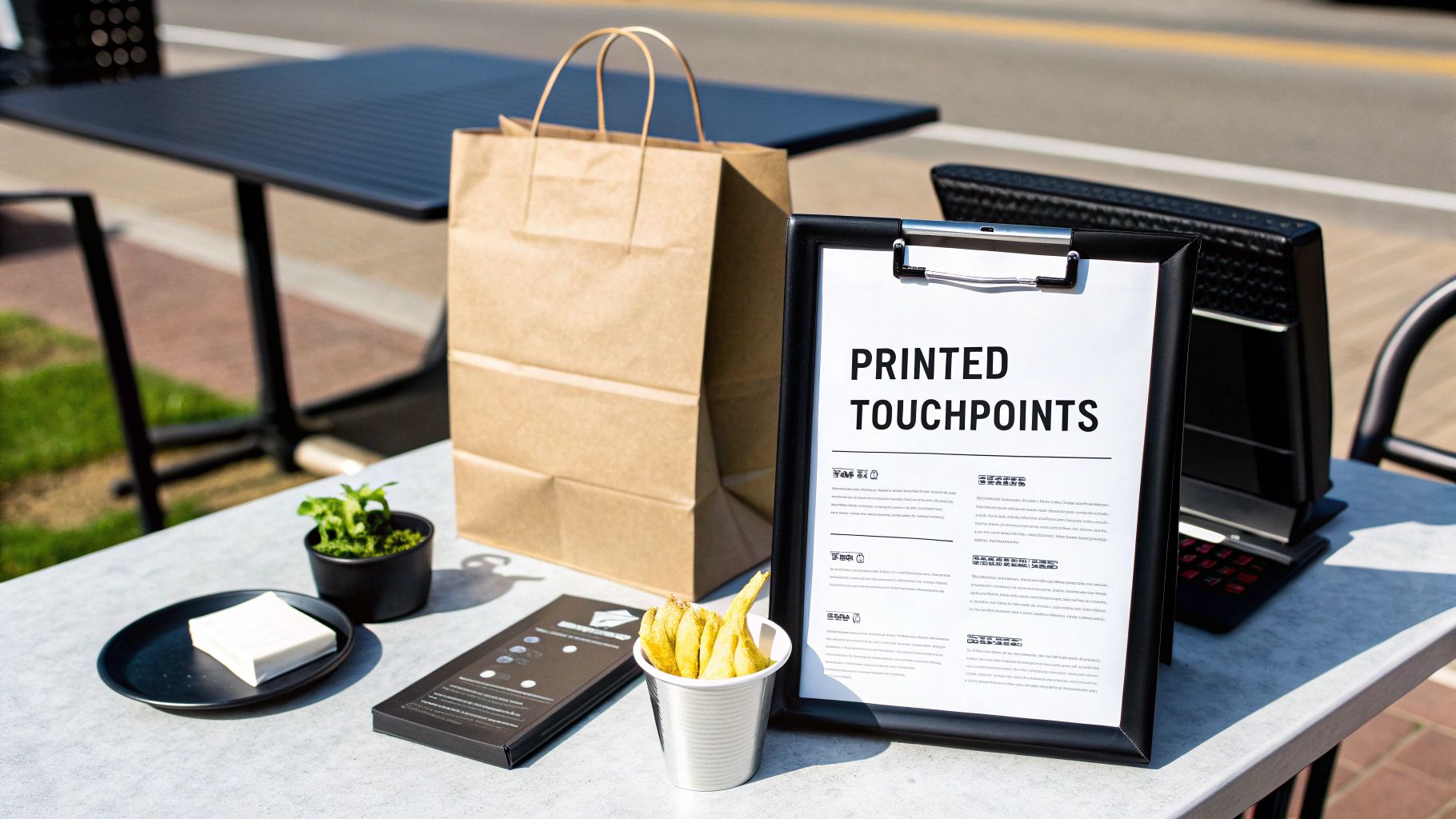
While your digital presence is crucial, the real magic happens inside your restaurant. This is where your brand becomes something guests can touch, feel, and experience firsthand. Your printed materials—from the menu they hold to the business card they take home—are the tangible pieces that tell your story.
These items aren't just afterthoughts; they are critical touchpoints that can turn a good meal into a memorable brand experience. Think of them as your silent storytellers, constantly reinforcing the identity you've worked so hard to build.
The Menu: More Than Just a List of Food
Your menu is arguably the most powerful sales tool you have. It’s not just a directory of dishes; its design, layout, and even the feel of the paper can subconsciously guide guest decisions and boost your profits. A well-designed menu strategically uses visual cues, like boxes or bold fonts, to highlight high-margin items.
The physical quality speaks volumes, too. A flimsy, stained piece of paper screams neglect. On the other hand, a clean, substantial menu with crisp typography communicates the same care and quality you put into your food. Every detail matters.
On-Site Promotions That Actually Work
Table tents, posters, and flyers are your in-house marketing crew. They create a dynamic atmosphere and can be incredibly effective at driving specific sales goals when done right.
Here's how to think about them tactically:
- Table Tents: Perfectly positioned to catch a guest's eye right when they’re thinking about another drink or dessert. Use them for happy hour deals or your signature dessert special.
- Posters: Big, bold posters can do more than just advertise; they can convey your brand's personality. Showcase your commitment to local farmers or tell the story behind your restaurant's name.
- Flyers: Ideal for tucking into takeout bags. Announce new menu items or offer a small discount for joining your loyalty program. The right brochure and flyer printing can make a huge difference in how these are received.
The trick is to make your in-house promotions feel like a natural part of the dining experience, not a pushy sales pitch. They should blend into the decor but still be compelling enough to catch the eye and influence a choice.
Communicating value has become more important than ever. With many customers watching their spending, your print materials offer a direct line to showcase affordability. A simple, well-placed table tent highlighting a lunch combo can directly address this need, and restaurants that get this right are seeing real results in customer traffic. For a deeper dive into how smart marketing drives sales, check out this detailed consumer insights report.
Turning First-Time Visitors into regulars
Don't let the brand experience end when the bill is paid. Smart, well-designed print materials can keep the conversation going and give guests a reason to come back.
A professional business card is non-negotiable—it’s a pocket-sized reminder of your brand's quality. But you can go further. A simple loyalty program, whether it’s a classic punch card or a sign-up slip, provides a tangible incentive to return. Each stamp brings them one step closer to a reward and solidifies their connection to your brand.
By putting real thought into your print materials, you transform every physical interaction into a powerful branding moment. Ready to bring your restaurant's story to life? Get a quote from us today and we'll help you create print pieces that people remember.
Weaving Your Physical and Digital Branding Together
Your restaurant's brand has to feel the same everywhere a customer finds you. That seamless experience—from the menu they hold in their hands to the website they scroll through on their phone—isn't just a nice touch anymore. It's an absolute must for building a strong, memorable brand.
This connection is where your physical and digital worlds meet, creating a powerful loop. A great in-house experience should spark online engagement, and a killer online presence should pull people through your doors. When everything is in sync, your brand story becomes clear and convincing at every single touchpoint, which is how you build real customer trust and loyalty.
Creating a Seamless Brand Experience
True brand consistency is in the details. The font on your menu should be the exact same one on your website. The friendly, casual voice you use in your Instagram captions should be the same way your staff greets guests when they walk in. It’s this kind of alignment that makes your brand feel genuine and dependable.
You don't need a massive budget to bridge this gap, either. Simple, creative tactics work wonders. A QR code on a coaster can lead directly to your Instagram page for an instant follow. A clever design on your takeout bags can point customers to your online ordering platform, nudging them toward their next digital order.
These small integrations really do add up. They create a unified journey for your customers, who start to see your brand not as a bunch of separate pieces but as one cohesive, memorable experience. This is a core part of modern restaurant branding that truly separates the thriving spots from everyone else.
Turning Physical Touchpoints into Digital Gateways
Think of your printed materials as more than just paper and ink; they're launchpads for digital interaction. Every physical item in your restaurant is a potential gateway to your online world.
Here are a few practical ways to do it:
- Menus with a Digital Twist: Add a small line at the bottom of your menu inviting guests to check out your weekly specials on your blog or follow your social media for a peek behind the scenes.
- Table Tents for Engagement: Don't just use table tents to push specials. Use them to promote a social media photo contest with a unique, branded hashtag.
- Business Cards That Do More: Make sure your social media handles are on your business cards. This makes it incredibly easy for catering clients or event partners to find and connect with you online.
This digital-physical integration is a cornerstone of modern restaurant marketing. An optimized Google Business Profile can generate significantly more views than a website, a critical fact since most diners discover new spots through search. This synergy is how major brands lead their categories—by blending social media buzz with tangible branding like updated signage and menus.
As you start connecting your physical and digital branding, mastering your restaurant's online reputation management becomes essential for shaping your brand's story and attracting new customers.
Every single interaction, whether it happens online or in person, contributes to how people see your brand.
Common Questions About Restaurant Branding
Diving into a branding project for your restaurant can feel overwhelming. It's a huge investment, so it's only natural to have a few questions before you start writing checks. Let's tackle some of the most common things restaurant owners ask.
How Much Should I Budget for Branding and Print?
This is the million-dollar question, isn't it? The truth is, there's no single price tag. A simple logo from a freelance designer might only set you back a few hundred dollars. On the other hand, a full-blown brand strategy and identity package from a specialized agency can run well into the thousands, sometimes tens of thousands. It all depends on the scope.
When it comes to your printed materials, the budget is a moving target based on how many you need, the paper you choose, and any fancy finishes. A good starting point is to earmark 1-2% of your projected annual revenue for your total marketing and branding efforts. For print costs specifically, the smartest move is to get a custom quote. That's the only way to see how your vision for menus, signs, and flyers actually lines up with what you can afford.
How Do I Know When It’s Time for a Rebrand?
Your business will give you clues. Are you consistently pulling in the wrong crowd? Does your look feel stale next to the new place that just opened down the street? These are big red flags.
Another classic trigger is a major shift in your business itself. If you've completely overhauled your menu or pivoted your entire concept from a casual diner to a fine-dining spot, your old branding just won't cut it anymore.
A rebrand isn't just a fresh coat of paint. It's a strategic move to make sure the story you're telling the world matches the business you're running today. If your brand no longer tells the right story, it's time for a rewrite.
What Are the Most Critical Print Materials for a New Restaurant?
When you're first opening your doors, you have to be strategic. Focus on the things that have a direct line to making a sale and shaping the customer's first impression. Your non-negotiables are:
- A Well-Designed Menu: This is your most important sales tool. Period.
- Professional Business Cards: A small but mighty reminder of your brand's quality.
- Exterior Signage: This is what gets people to stop, look, and walk through the door.
- Table Tents or Flyers: These are perfect for pushing specials, desserts, or high-margin drinks right at the point of sale.
Get these foundational pieces locked in first. After that, you can start thinking about expanding into branded takeout containers, loyalty cards, and other marketing goodies.
Can I Handle My Restaurant Branding Myself?
With tools like Canva out there, it's definitely tempting to go the DIY route. And you certainly can, but it’s crucial to be honest with yourself about the skills and time required. Doing it yourself can save money upfront, but it often lacks the strategic depth and professional execution that makes a brand truly memorable and effective.
If you have a knack for design, you might be able to create some solid promotional flyers or social media posts. But for your core identity—your logo, your color palette, and the overall strategy—investing in a professional designer usually pays for itself many times over. A pro builds a brand that not only looks good but also drives real business.
Ready to create print materials that bring your brand to life and make a real impression on every guest who walks in? The team at Camelot Print & Copy Centers can help you craft everything from menus to banners with expert quality. Get a custom quote today and let's get started.