Picking the right paper is probably the single most overlooked step in any print project, but it’s what separates the good from the truly great. It’s not just about what your project looks like; it’s about what it feels like in your customer's hands.
Think of it this way: paper is the foundation. You wouldn't build a skyscraper on a flimsy base, and you shouldn't print a high-impact brochure on everyday copy paper. The right choice makes colors richer, text sharper, and gives your final piece the professional weight it deserves.
Your Quick Guide to Common Paper Types
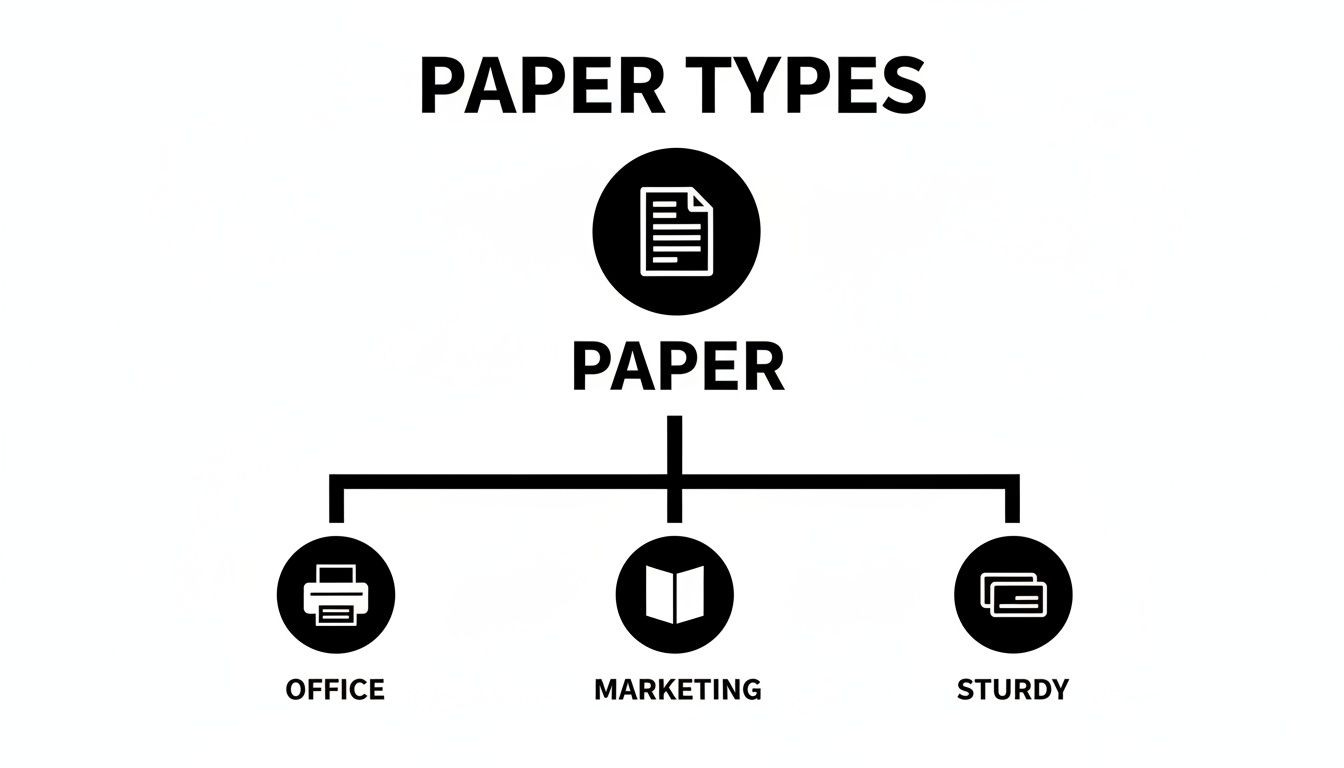
So where do you start? The good news is that nearly all paper options fall into three main categories. Understanding these groups is the key to demystifying the whole process.
- Office Paper: This is your everyday workhorse. It's lightweight, uncoated, and cost-effective—perfect for internal drafts, meeting notes, and daily reports.
- Marketing Paper: When you need your visuals to do the talking, this is what you want. These papers are often heavier and feature a special coating (like gloss or matte) that makes images and colors leap off the page. Think brochures, flyers, and catalogs.
- Sturdy Paper (Cardstock): For projects that need to be durable and make a strong first impression, cardstock is the answer. Its thickness and rigidity are essential for business cards, postcards, invitations, and report covers.
This simple breakdown shows how these core types connect to their most common uses.
Ultimately, it comes down to matching the paper's function to your project's goal. A business card has to feel substantial, so a heavy cardstock is the only way to go. An internal manual, on the other hand, just needs to be clear and economical.
Matching your project’s purpose—whether it's an architectural plan or a promotional flyer—to the perfect paper type is the first step to a successful outcome. From here, we can dive into the specifics of weight and finish to really nail it down.
Feeling ready to find the perfect stock for your next project? Get a quote from our experts. We can walk you through the options and even provide samples so you can see and feel the difference for yourself.
Understanding Coated and Uncoated Paper
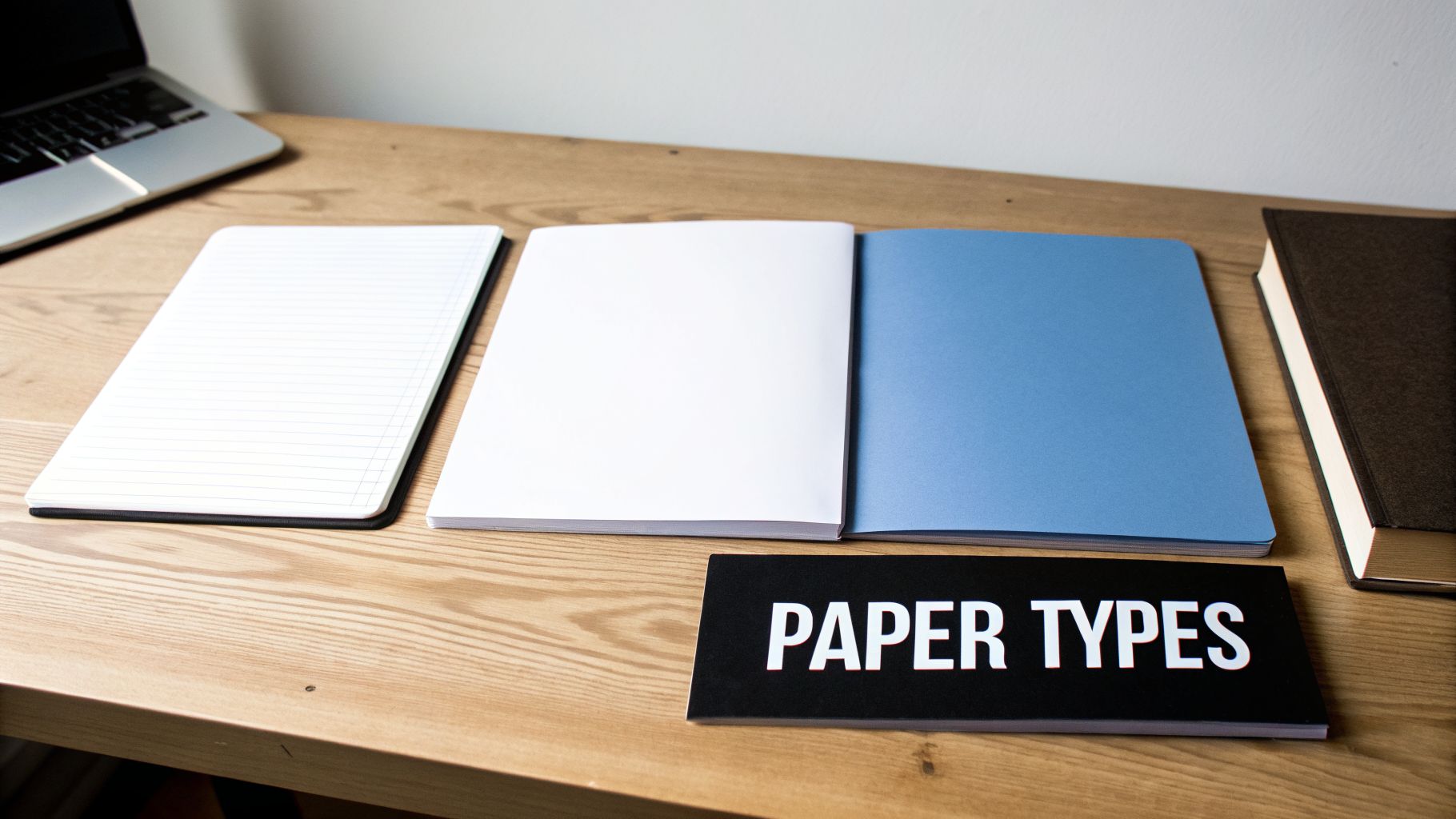
When it comes to printing, one of the first and most important decisions you'll make is choosing between coated and uncoated paper. This single choice completely changes how your final piece looks, feels, and even communicates its message.
Think of it this way: painting a raw, unfinished piece of wood. The wood is porous, has a natural texture, and will soak up the paint. That’s uncoated paper. Ink sinks right into its fibers, giving colors a softer, warmer feel.
Now, imagine that same piece of wood sealed with a layer of varnish. The paint sits right on top of that smooth, sealed surface. That’s coated paper. A clay or polymer coating is applied at the mill, creating a barrier that keeps ink from being absorbed.
The Natural Feel of Uncoated Paper
Uncoated paper has a wonderfully tactile, organic quality. With no coating, you get a matte, glare-free surface that's easy on the eyes, making it a fantastic choice for documents heavy on text.
Because the ink settles into the paper, it creates a subtle and elegant look that people often associate with high-end stationery or professional business documents. It also has a huge practical benefit: it's a dream to write on. This makes it the go-to for anything that needs a personal signature or handwritten note.
Common uses for uncoated paper include:
- Business Letterhead and Envelopes: Its sophisticated feel and writability are the standard for professional correspondence.
- Reports and Manuals: The lack of glare makes reading long, text-heavy documents much more comfortable.
- Forms and Workbooks: It takes ink from a pen or pencil perfectly, without annoying smudges.
- Elegant Invitations: It offers a timeless, classic aesthetic for weddings and other formal events.
The Polished Look of Coated Paper
If your project is all about making images pop with vibrant color and sharp detail, coated paper is your best friend. The coating keeps the ink from spreading and soaking in, which means photos look crisper, colors appear more saturated, and the whole piece feels more "finished" and professional.
Coated paper ensures that ink sits on the surface, producing sharper, more vivid images and a sleek, high-end feel. It’s designed to make your visuals stand out and grab attention.
This paper also comes in different sheens, with the two most popular being gloss and matte. The one you pick really just depends on the final look you're after. If you want to get into the weeds on this, you might find it helpful to check out our guide on matte vs glossy paper.
Gloss Coating: This finish is very shiny and reflective. It makes colors look incredibly rich and punchy, so it’s perfect for photo-heavy designs where you want to make a big impact.
- Best For: Marketing brochures, promotional flyers, and catalog covers.
Matte Coating: This gives you a smooth, non-glossy surface that cuts down on glare. It delivers a more subdued, modern look while still producing great color and clarity.
- Best For: Art prints, premium marketing materials, and any design where you want a sophisticated, glare-free finish.
Ultimately, choosing between coated and uncoated paper is about matching the material to your project's goal. The best way to know for sure is to see and feel them for yourself. To check out some samples and find the perfect paper for your next job, get a custom quote from our experts.
How to Decode Paper Weight and Thickness

Trying to make sense of paper weights can feel like learning a new language. You’ll see numbers followed by pounds (#), points (pt), or grams per square meter (gsm), and it’s easy to get lost. But getting a handle on these terms is the secret to choosing a type of paper that not only looks fantastic but also feels right and performs exactly how you need it to.
It’s a system that can trip up even seasoned designers. For instance, you might assume an 80# Text paper and an 80# Cover paper are pretty much the same. In reality, the 80# Text is much thinner and more flexible. This isn't a typo; it’s because they’re measured on completely different scales.
Here’s a simple way to think about it. Text weight papers are your t-shirts—they’re light, flexible, and perfect for the inside pages of a book or brochure. Cover weight papers, often called cardstock, are like your jackets—thicker, sturdier, and designed to protect what’s inside while making a great first impression.
Text Weight vs. Cover Weight
The main reason for the confusion is the US "basis weight" system, which is a bit old-fashioned. Different paper categories (like Bond, Text, and Cover) have their own unique standard sheet sizes. A ream of 500 sheets of that standard size is weighed, and that number becomes its "basis weight."
This is precisely why an 80# Text feels so much lighter than an 80# Cover. The standard sheet for "Text" paper is much larger than the one for "Cover" paper. So, for the stack to weigh the same 80 pounds, the individual Text sheets must be significantly thinner.
The most important thing to remember is this: A higher number within the same category means a heavier, thicker paper (100# Text is thicker than 80# Text). But you can’t compare numbers across different categories. Always specify both the weight and the type—like "80# Cover" or "100# Text."
If you really want to get into the nitty-gritty, our detailed guide on paper stock weight breaks down all the technical details.
Common Paper Weights and Their Uses
Let's translate these numbers into real-world projects. Seeing what these weights are typically used for will give you a much better feel for how they’ll perform.
- 20-24# Bond (or 50-60# Text): This is your everyday office copy paper. It’s light, economical, and just right for internal memos, drafts, and daily printing needs.
- 70-80# Text: This is a nice step up, offering a more substantial feel without being rigid. It's a fantastic choice for professional flyers, sales sheets, and the inner pages of magazines and catalogs.
- 100# Text: When you want to signal quality, this is your go-to. It feels noticeably thicker and more luxurious, making it a popular pick for high-end brochures, formal proposals, and presentations that need to impress.
When your project demands more backbone and durability, it’s time to look at cover weights, also known as cardstock. These are the heavyweights, built for business cards, postcards, report covers, and anything else that needs to stand up to handling.
Selecting the Right Cardstock Thickness
With cardstock, even a small jump in weight can make a huge difference in how the final piece feels. The principle of matching thickness to function is everywhere—for instance, understanding the structural needs of single, double, or ripple wall paper coffee cups shows just how critical thickness is for durability and insulation.
- 80# Cover: This is a great entry-level cardstock. It’s sturdy but still flexible enough to be scored and folded cleanly, making it perfect for booklet covers, durable menus, and mail-ready postcards.
- 100# Cover: A true workhorse. This is a classic, all-purpose cardstock that feels firm and substantial. It’s the standard for great business cards, event invitations, and presentation covers.
- 130# Cover and Higher: You’re now in the premium category. These heavy-duty stocks offer maximum rigidity and a high-end feel, often reserved for luxury business cards, rack cards that won't flop over, and premium packaging.
Ultimately, picking the right paper weight is a balancing act between your project’s purpose, your brand’s image, and your budget. Nothing beats firsthand experience, though. The absolute best way to know for sure is to see and touch the paper samples yourself.
Ready to find that perfect paper? The team at Camelot can walk you through our swatch books and offer expert advice based on thousands of successful projects. Get a quote today, and we’ll help you choose a stock that truly elevates your work.
When to Use Standard Copy and Bond Paper
If you’ve ever loaded paper into an office printer, you’ve handled copy paper. It’s also known as bond paper, and it’s the absolute workhorse of the printing world—a reliable, cost-effective choice for the vast majority of daily business needs.
While it may not have the flair of a glossy photo stock, its role is critical. This paper is specifically engineered for high-volume jobs where clarity and efficiency matter more than a fancy finish, making it the default for a huge range of applications.
Its lightweight feel, usually between 20# and 24#, and uncoated surface are what make it so universally compatible with laser and inkjet printers. That versatility is exactly why you’ll find stacks of it in almost any office.
The Go-To for Everyday Operations
Bond paper is the backbone of day-to-day business printing, a fact reflected in its massive market size, which is projected to hit USD 48.19 billion by 2026. This isn't just a number; it shows just how much the world relies on this simple paper for getting things done. You can dive deeper into various paper types and market trends by exploring comprehensive guides on different paper stocks.
What makes it so popular? Pure practicality. For internal documents that don’t need to wow a client or last for decades, bond paper is the smart, economical pick. It gives you clean, readable text without the added cost of heavier or specially coated stocks.
Bond paper provides a solid foundation for drafts and internal communications. It ensures clean, readable results for daily operational needs without compromising professionalism on documents that are meant for function over form.
From law firms printing out draft agreements to schools creating coursework, this is the paper that reliably gets the job done.
Ideal Use Cases for Copy and Bond Paper
So, when is standard copy paper the right choice? It truly shines whenever volume, speed, and budget are your top priorities. Think of it as the perfect match for any functional, internal-facing document.
Here are a few of the most common times to use it:
- Internal Drafts and Memos: Perfect for reviewing documents, sharing quick notes, and printing internal updates where a premium feel isn't needed.
- High-Volume Copying: When you need hundreds of handouts for a meeting or training session, bond paper keeps your costs from spiraling.
- Training Manuals and Reports: For longer documents like employee handbooks or internal reports, its light weight keeps the final product from becoming a heavy, clunky binder.
- Everyday Office Printing: From printing an email to grabbing a quick reference sheet, this is your all-purpose solution.
- Healthcare and Legal Documents: Patient info, case files, and internal legal records are often printed on bond paper for easy filing and archiving.
Even within this straightforward category, there are subtle differences. A key one is the paper’s brightness level, which is a measurement of how white it appears. A higher brightness (like 96 or 98) creates a stronger contrast with black ink, making text pop and appear crisper. For an important internal report, choosing a brighter stock can add a nice touch of professionalism.
Though it seems basic, copy and bond paper truly fuel office productivity. For these everyday needs, you need a partner who can deliver consistent quality on time. For help with your high-volume copying or to get a quote on your next project, contact the experts at Camelot Print & Copy Centers.
Choosing Specialty Papers for High-Impact Projects
Sometimes, a project needs to do more than just look good—it needs to make someone stop and take notice. When you want to create something truly unforgettable, standard paper just won’t do the trick. This is where specialty papers enter the picture, offering a whole world of unique textures and finishes designed to leave a lasting impression.
Think of it this way: choosing a specialty stock is a strategic move. It's for those projects that need to be felt as much as they are seen, turning a simple piece of print into something substantial. It’s a powerful way to signal quality and make an impact before your audience reads a single word.
Textured Papers for a Touch of Luxury
One of the most popular ways to add a premium feel is with textured stock. These papers have a distinct feel pressed right into them, a surface that immediately communicates a higher level of care and sophistication.
- Linen Finish: With its subtle, crosshatch pattern, this paper feels like fine linen fabric. It’s a timeless choice for professional stationery, formal invitations, and classic business cards where you want to add a touch of class without being flashy.
- Felt Finish: This paper has a soft, almost woven texture that feels warm and high-end, much like an artist’s canvas. It’s a fantastic fit for projects that aim to convey a sense of craft and artistry, like fine art prints or upscale marketing brochures.
- Laid Finish: You can spot a laid finish by its fine, parallel lines that look like old-world, handcrafted paper. This gives it a traditional and prestigious feel, working beautifully for things like official letterhead and certificates.
Curious about how paper choice can define your professional brand? We take a closer look in our guide to the best paper for business cards.
Choosing a specialty paper is a deliberate branding decision. The tactile experience of a textured or metallic stock elevates the perceived value of your message and creates a lasting, high-impact connection with your audience.
Durable and Dazzling Paper Options
Beyond adding texture, specialty papers can also solve very practical problems or add a bit of visual pop. When you need something to withstand the elements, or you need it to literally shine, there’s a stock designed for the job.
Synthetic Paper
What if your paper was completely tear-proof and waterproof? That’s exactly what synthetic paper is. It isn’t made from wood pulp at all; it’s a polypropylene-based material that gives it incredible durability. This makes it the only choice for items that will be handled constantly or exposed to moisture.
- Best For: Restaurant menus, outdoor signs, field manuals, and ID cards.
Metallic and Pearlescent Paper
For a touch of glamour, nothing beats the elegant shimmer of metallic and pearlescent papers. These stocks are infused with tiny, light-catching particles that create a beautiful sparkle. It’s a surefire way to add a festive or luxurious feel to a project.
- Best For: Holiday cards, high-end event invitations, premium product packaging, and any marketing piece that needs to feel special.
The world of specialty papers is vast, with a unique solution for nearly any project that needs to stand out. Of course, the best way to choose is to see and feel them for yourself. To explore these options and get expert advice on which stock will make your project shine, get a quote from Camelot Print & Copy Centers.
Let an Expert Help You Nail the Perfect Paper Choice

Okay, so now you know the difference between coated and uncoated stocks, what paper weight really means, and that specialty finishes exist. But knowing the theory is one thing. Choosing the right paper for your project is where it gets real. How do you turn all that information into a printed piece that looks and feels exactly how you envisioned it?
The trick is to stop thinking about paper in general terms and start focusing on your specific goals. This is where leaning on a print expert can save you a world of frustration, turning guesswork into a clear, confident decision.
Start With One Simple Question: What's the Goal?
Before you get lost in swatch books and paper weights, just ask yourself: what is this printed piece supposed to do? The answer will instantly point you in the right direction and cut your options in half.
Is it a disposable flyer for a weekend sale? Or is it a wedding invitation meant to be kept for years? Are you creating a high-end brochure to sell luxury real estate, or a technical manual that will get tossed around a workshop? Each of those jobs calls for a completely different paper.
A seasoned print pro will always start here, asking the right questions to frame the project before a single sheet is printed.
Match the Paper to Your Brand and Its Job
Once the main objective is clear, it’s time to align the paper with your brand's personality and the practical needs of the piece. These two things have to work together to be effective.
Does It Reflect Your Brand?
- Modern and sleek? A smooth, matte-coated cover stock often feels clean and minimalist.
- Timeless and traditional? A textured linen or felt paper can communicate a sense of classic elegance and quality.
- Bold and vibrant? To make your colors pop off the page, nothing beats a high-gloss coated paper.
What Does It Need to Do?
- Be handled a lot? A restaurant menu, for instance, needs something durable. You might even consider a synthetic or laminated stock.
- Be written on? If it’s a form or a notecard, you absolutely need an uncoated paper to avoid ink smearing everywhere.
- Be filed or folded? Think legal documents or architectural plans. A sturdy bond paper that folds cleanly without cracking is perfect.
The best paper choice always strikes a balance between three things: your project's goal, your brand's identity, and the practical way the piece will be used.
You Have to Feel It to Believe It
Reading about paper online is a great start, but it will only get you so far. Nothing—and I mean nothing—replaces the experience of actually touching the paper yourself. You can’t feel a website, and a digital proof won’t tell you how a heavy 130# cover stock feels compared to a standard 100# cover.
This is why swinging by a professional print center is so crucial. When you can hold a swatch book in your hands, you can:
- Feel the serious stiffness of a 110# uncoated cover versus the floppiness of a 100# gloss text.
- See for yourself how light bounces off a gloss, matte, and silk finish.
- Compare the subtle, elegant textures of linen, laid, and felt papers.
Getting your hands on the actual stock takes all the guesswork out of the equation. An expert can also walk you through other technical details, like understanding optimal print resolution (DPI), to guarantee your design looks sharp on whatever paper you choose.
Here at Camelot Print & Copy Centers, our team has seen it all. We’ve helped clients with thousands of projects just like yours, and we can give you recommendations based on that real-world experience. We’ll make sure your marketing brochures feel substantial and your spec books are printed on a stock that’s built to last.
Don't leave it to chance. Ready to find that perfect paper? Get a quote and personalized advice from our team today.
Frequently Asked Questions About Paper Types
Choosing the right paper can feel overwhelming, but a few key bits of information can make all the difference. To make sure your final print project looks and feels exactly the way you envision, let’s clear up some of the most common questions we hear.
What Is the Difference Between Text and Cover Weight Paper?
This is probably the most common point of confusion. The easiest way to wrap your head around it is to picture a high-end magazine. The flexible, inner pages are text weight, while the thick, sturdy cover is cover weight.
Even if both are labeled as "80#," they are on completely different scales. An 80# text paper is a premium, pliable sheet—perfect for things like brochures or flyers. An 80# cover paper, on the other hand, is a much stiffer cardstock you'd use for report covers, postcards, or business cards. Always remember to specify "text" or "cover" to avoid surprises and get the right stock for your job.
What Is the Best Type of Paper for Marketing Brochures?
If your brochures feature vibrant, full-color images, you almost always want a coated paper. The coating creates a seal on the paper’s surface, keeping the ink from soaking into the fibers. The result? Sharper details, richer blacks, and colors that truly pop.
You've got two main choices here:
- Gloss-Coated Paper: This gives you that classic, shiny finish that makes photos and graphics look incredibly dynamic and eye-catching.
- Matte-Coated Paper: For a more modern, sophisticated feel, a matte finish provides excellent color depth without any glare.
For a reliable, professional-feeling brochure, a 100# gloss text is a fantastic and very popular starting point.
Can I Get a Paper Sample Before Placing a Large Order?
Yes, you can—and you absolutely should. Paper is a tactile thing. You can read descriptions all day, but nothing replaces actually feeling the weight, texture, and finish in your own hands. It’s a huge part of the impression your project will make.
Visiting a professional print center is the best way to do this. You can flip through swatch books, compare different stocks side-by-side, and even get samples of the specific papers you're considering. It's a simple step that gives you total confidence before you commit to the full run.
Are High-Quality Papers Environmentally Friendly?
They certainly can be. The paper industry has made huge leaps in sustainability, and you don’t have to choose between a premium feel and a responsible product.
Making smart choices for your project goes beyond just the paper's origin; it also includes matching the right stock to your design. An expert can help you with technical specs like understanding optimal print resolution (DPI) to ensure your files print beautifully on your chosen paper. When discussing options with your printer, ask about eco-friendly papers that have:
- High Recycled Content: Many beautiful, high-quality papers contain post-consumer recycled materials.
- FSC Certification: The Forest Stewardship Council (FSC) seal is your guarantee that the paper pulp came from responsibly managed forests.
Plus, think about it this way: choosing a more durable, high-quality paper for things like menus or manuals means they last longer and don't need to be reprinted as often. That's sustainability in itself.
Still have questions? The best person to ask is an expert who works with these materials every single day. For personalized advice and to explore paper samples for your next project, the team at Camelot Print & Copy Centers is here to help. Get a free quote today and let's make your project perfect.